
Salads
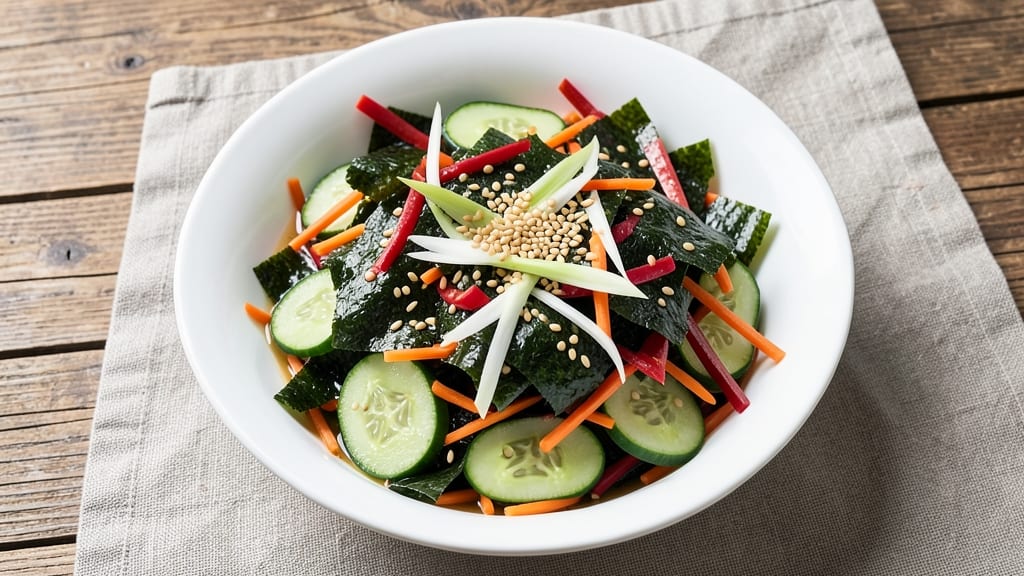
This Asian seaweed salad recipe brings bold flavors and oceanic freshness to your table in just 15 minutes—no cooking required. The secret lies in balancing crispy nori sheets, tangy citrus, and nutty sesame for a dish that’s vibrant, umami-rich, and packed with texture.
I developed this recipe after craving something light yet deeply flavorful, and it quickly became a staple in my meal rotation.
The beauty of this salad is its simplicity: just a handful of ingredients transform into a restaurant-worthy dish. Thinly sliced cucumbers and carrots add crispness, while sesame seeds and scallions bring layers of aroma.
The dressing—a zesty blend of rice vinegar, soy sauce, and sesame oil—ties everything together with a perfect balance of sweet, salty, and tangy. It’s vegan, gluten-free, and ready in one pan.
What you’ll end up with is a salad that’s as visually stunning as it is delicious—deep green nori sheets contrasting with bright vegetables, all glistening under a glossy dressing.
The umami from the seaweed pairs perfectly with the freshness of the veggies, creating a harmony of flavors that’s both comforting and exciting. Serve it as a side or a light main, and watch it disappear from the plate.
Perfect for meal prep, potlucks, or a quick lunch, this salad keeps well for up to 3 days in the fridge. The flavors only deepen over time, making it an ideal make-ahead dish. Let’s get started—your taste buds (and your health) will thank you.
Ingredients for asian seaweed salad
Six crisp ingredients and a zesty dressing transform into this vibrant, umami-packed salad in minutes.
| Ingredient | Amount | Notes |
|---|---|---|
| Dried Nori Sheets 🌿 | 6 sheets | High-quality, thinly cut preferred |
| English Cucumbers 🥒 | 1 whole | Seeded, thinly sliced lengthwise |
| Carrots 🥕 | 2 medium | Julienned into fine matchsticks |
| Red Bell Pepper 🌶️ | ½ whole | Thinly sliced into ribbons |
| Scallions 🧅 | 4 whole | Thinly sliced, white and green parts |
| Sesame Seeds 🌰 | 2 tbsp | Toasted for nutty aroma |
| Toasted Sesame Oil 🫒 | 2 tbsp | High smoke point preferred |
| Rice Vinegar 💧 | 3 tbsp | Seasoned or unseasoned |
| Tamari or Gluten-Free Soy Sauce 🍶 | 2 tbsp | Gluten-free for dietary needs |
| Fresh Lime Juice 🍋 | 2 tbsp | Freshly squeezed, zesty |
| Maple Syrup 🍯 | 1 tbsp | For subtle sweetness |
| Sesame Seeds 🌰 | 1 tbsp | Extra for garnish |
| Fresh Mint Leaves 🌿 | ¼ cup | Chopped, optional garnish |
The nori sheets are the star here—look for vibrant green sheets at Asian markets or the seafood section of your grocery store. Trader Joe's and Whole Foods carry high-quality brands like Marukyu or Nori Factory. If you can't find dried sheets, fresh wakame seaweedpick one that's firm and bright—the color will pop in the salad. Scallions add a mild onion bite, but if you're sensitive to their sharpness, use just the green parts.
No sesame seeds? Toasted pumpkin seeds work in a pinch, though they lack that nutty depth. Running short on lime juice? Substitute lemon juice at the same amount, but add a pinch of sugar to balance. The maple syrup can be swapped for agave or coconut sugar if preferred. For a gluten-free option, ensure your tamari is certified—San-J Tamari or Kikkoman Gluten-Free Soy Sauce are reliable brands. If you're missing the red bell pepper, yellow or orange bell peppers add a nice contrast. The dressing can be made ahead and stored in the fridge for up to 5 days, so double it if you're prepping for the week.
This salad keeps beautifully for 3-4 days in an airtight container, with flavors deepening over time. Store the dressing separately if you plan to keep it longer than 2 days to prevent sogginess. For meal prep, portion into individual containers—glass jars with compartments work perfectly. If you're short on time, the dressing can be prepped in 5 minutes, and the veggies sliced ahead while you handle the dressing. The nori sheets stay crisp for 2 days if stored in a sealed container with a slice of bread to absorb moisture.
Why You'll Love This Recipe
- No-Chop Nightmare: I swear by this recipe when I’m too tired to julienne—just slice the cucumbers and carrots into thick half-moons. The nori adds that oceanic crunch without any extra work, and honestly? No one notices if the veggies aren’t perfectly uniform.
- Umami Bomb: Between the toasted nori sheets and the tangy sesame dressing, this salad packs a flavor wallop. The red bell pepper brings a subtle sweetness, while the scallions add a fresh kick—like a mini flavor party in your mouth that costs almost nothing.
- Lunchbox Hero: I make a big batch on Sundays and pack it for work all week. The crisp veggies hold up perfectly, and the nori stays sturdy even after a day in the fridge. My coworkers keep asking for the recipe—turns out, it’s the ultimate no-effort side that still feels special.
- Budget Crunch: Dried nori is dirt cheap, and the rest of the ingredients are pantry staples. I’ve fed four people for under $5 with this—plus, it’s one of those salads that actually tastes better the next day. Leftovers? More like wish-I’d-made-moreovers.
Step-by-step instructions for Asian seaweed salad
Here's how to create a vibrant, umami-rich salad that balances crisp textures and bold flavors.
Prepare the Vegetable Components
Start by slicing the 1 whole English cucumber lengthwise into thin strips, removing seeds as you go. I use a sharp mandoline for even slices, but a sharp chef's knife works too—just be careful with those fingers. Next, julienne the 2 medium carrots into fine matchsticks, about ¼-inch thick. For the 0.5 whole red bell pepper, slice it into thin ribbons by cutting parallel to the core, then stack and slice again for delicate strips.
Finally, thinly slice the 4 whole scallions, separating the white and light green parts from the darker green tops. You'll want these as thin as possible—almost like confetti. Set all prepared vegetables aside in separate piles. The key here is uniformity; even cuts ensure balanced texture in every bite.
Toast the Sesame Seeds and Assemble the Dressing
In a dry skillet over medium heat, toast the 2 tablespoons sesame seeds for 2-3 minutes until they turn a rich golden brown and release their nutty aroma. Watch closely—they'll darken quickly. Remove from heat and set aside to cool slightly.
While the seeds toast, combine the 3 tablespoons rice vinegar, 2 tablespoons tamari or gluten-free soy sauce, 2 tablespoons fresh lime juice, 1 tablespoon maple syrup, and 2 tablespoons toasted sesame oil in a small bowl. Whisk vigorously until fully emulsified. The dressing should be smooth with a glossy finish—this ensures even coating of all salad components. Taste and adjust seasoning if needed; you might want to add a pinch more salt or lime juice based on your preference.
Rehydrate and Prepare the Nori Sheets
Fill a medium bowl with warm water—not hot, just comfortably warm to the touch. Submerge the 6 sheets dried nori sheets one at a time, letting them soak for 5-7 minutes until pliable. I use chopsticks to gently press them down as they rehydrate, ensuring even softening without tearing.
Once softened, carefully remove each sheet and pat dry with paper towels. Then, cut each sheet diagonally into 4 equal triangular pieces. The nori should be tender but still hold its shape—if any pieces feel rubbery, let them soak a minute longer. Arrange the nori pieces on a clean kitchen towel to dry completely before adding to the salad. This step is crucial for achieving that signature crisp texture in your final dish.
Combine All Ingredients for Perfect Balance
In a large mixing bowl, gently combine the prepared cucumber, carrot, red bell pepper, and scallion strips. Add the rehydrated and dried nori triangles, spreading them evenly throughout. Pour the dressing over the vegetables and toss everything together with your hands or clean hands—this ensures even coating and helps distribute the nori pieces.
Sprinkle the toasted sesame seeds and 0.25 cup chopped fresh mint leaves over the salad. Gently toss again, being careful not to overmix—you want to preserve the individual textures. The salad should look vibrant with contrasting colors: deep green nori, bright orange carrots, red bell pepper ribbons, and pale green cucumber.
Rest and Serve for Optimal Texture
Let the salad rest for 5 minutes before serving. This brief waiting period allows the flavors to meld and the nori to absorb just enough dressing to become slightly more pliable without losing its crispness. Taste and adjust seasoning one final time—you might want to add a splash more lime juice or a drizzle of toasted sesame oil if needed.
Serve immediately while the nori maintains its perfect crunch. For presentation, arrange the salad on a chilled platter and garnish with additional toasted sesame seeds if desired. This salad pairs beautifully with grilled proteins or as a refreshing standalone dish—especially when the flavors are at their peak freshness.
Pro Tips For Making Asian Seaweed Salad
- STORE Nori DRY: I learned this the hard way—if you keep nori sheets in a damp bag, they’ll soften and lose that crisp snap you want. Store them in a cool, dark place (like a pantry) in their original packaging or a sealed container with a silica packet. That way, they’ll stay brittle and ready to tear into perfect ribbons whenever you need them.
- JULIENNE CUCUMBERS FAST: Skip the mandoline unless you’re feeling fancy—just grab a sharp chef’s knife and slice the cucumbers into 1/8-inch sticks by rocking the blade back and forth like you’re chopping herbs. No fancy tools, no frustration, and the texture stays crisp. (Yes, even if you’re impatient like me.)
- SAVE THE VINEGAR WATER: After soaking the nori (if you’re hydrating it), don’t pour out that vinegar-infused water—strain it and save it. Mix a splash into your dressing later; it’ll deepen the umami flavor without overpowering the salad. I used to waste it, then realized it was the thing that made the dressing sing.
- DRESS LIGHTLY, TWICE: Drizzle the dressing over the salad just before serving—not while you’re prepping. Then toss gently so the nori and veggies absorb flavor without turning soggy. If it looks dry, add a little more right before eating. The first time I over-dressed, the salad turned into a sad, mushy pile. (Your future self will thank you.)
Essential equipment for this dish
Knife Essentials
For this salad, a sharp mandoline slicer is my secret weapon—it creates those perfect, even strips for cucumbers, carrots, and bell peppers that make all the difference. If you don’t have one, a high-quality chef’s knife (like the Mercer Culinary Genesis) with a 10-inch blade works beautifully.
Just be extra careful with those thin slices! For the scallions, a small pairing knife gives you the precision needed for those delicate confetti-like pieces. 🔪
Nori Prep Tools
Rehydrating nori sheets properly is key, and I’ve found a fine-mesh strainer or chopsticks makes the job easier. Use the strainer to submerge sheets one at a time, or gently press them down with chopsticks to ensure even softening.
A small mixing bowl (8-10 inches wide) works perfectly for soaking. For cutting, a sharp kitchen shears or a chef’s knife will give you clean diagonal cuts into those perfect triangular pieces.
Dressing Mixers
The dressing is where the magic happens, and a small whisk (like the OXO Good Grips) is essential for emulsifying the ingredients into a silky, glossy finish. If you don’t have a whisk, a fork or small spoon works in a pinch—just give it a good stir!
For measuring, a liquid measuring cup ensures precision with the rice vinegar, lime juice, and sesame oil. I also keep a small bowl (about 6-8 ounces) handy for mixing the dressing to avoid spills.
Serving Presentation
To keep everything fresh and vibrant, I love using a wide, shallow platter (like a ceramic or glass serving dish) to arrange the salad. For extra flair, a small set of tongs makes serving effortless without crushing the nori.
If you’re prepping ahead, glass airtight containers (like Pyrex) are perfect for storing the salad and dressing separately. For garnishing, a small spoon helps distribute the toasted sesame seeds and mint leaves evenly for that restaurant-worthy finish. ✨
Nutrition facts
Frequently asked questions
Can I use fresh seaweed instead of dried nori sheets?
Yes! Fresh wakame or hijiki work beautifully—just rinse thoroughly to remove any grit. Soak fresh seaweed for 5-10 minutes in warm water until tender, then drain and squeeze out excess moisture. Use about ½ cup packed fresh seaweed to replace 6 dried nori sheets. Fresh varieties add a milder, slightly sweeter flavor compared to nori's bold umami.
How do I keep the nori from getting soggy?
Store the dressing separately until serving and toss it with the salad just before eating. For meal prep, arrange the veggies and nori in layers with parchment paper between them in an airtight container. When ready to serve, add the dressing and gently toss. The nori should stay crisp for up to 2 days this way.
What's the best way to make this gluten-free?
Use certified gluten-free tamari or coconut aminos instead of regular soy sauce. Double-check all ingredients—some brands of rice vinegar may contain wheat. For extra safety, verify that sesame seeds and sesame oil are processed in gluten-free facilities. The original recipe is naturally gluten-free except for the soy component.
Can I add protein to this salad?
Try adding ½ cup edamame (lightly steamed), ¼ cup toasted peanuts, or ¼ cup grilled shrimp. For a vegan option, pan-fry chickpeas with a pinch of salt and smoked paprika. Add proteins just before serving to maintain the salad's crisp texture. The umami from seaweed pairs especially well with lightly cooked proteins.
Why does my dressing taste too salty?
Start with 1 tablespoon soy sauce instead of 2 and adjust to taste. The maple syrup helps balance saltiness—add an extra ½ teaspoon if needed. For a salt-free alternative, use coconut aminos (just 1 tablespoon) and add 1 teaspoon rice vinegar extra. Always taste as you mix to avoid oversalting.