
Salads
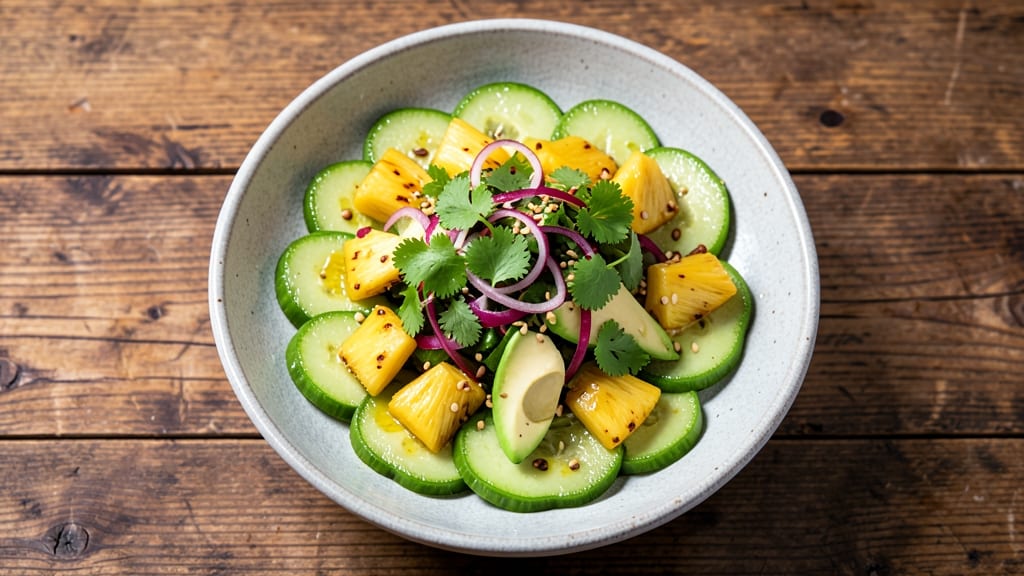
This ampalaya salad with pineapple recipe transforms bitter melon into a vibrant, refreshing dish that balances sweet and tangy flavors perfectly. The key lies in properly prepping the ampalaya—slicing it thinly and blanching to soften its texture while preserving its signature bitterness.
When paired with crisp pineapple chunks, creamy avocado, and a zesty vinegar dressing, the contrast creates a salad that’s both light and satisfying.
The dressing is where the magic happens—a simple yet bold mix of vinegar, sugar, and a touch of garlic that cuts through the bitterness while enhancing the tropical sweetness of the pineapple.
This salad works as a standalone meal or a vibrant side, especially during warm weather when fresh, crunchy vegetables shine. The preparation is straightforward, but the technique for handling the ampalaya ensures the best texture without overpowering the dish.
What makes this recipe stand out is the harmony of textures—crisp ampalaya, juicy pineapple, and creamy avocado—all tied together by a dressing that’s tangy yet balanced. It’s a dish that highlights the freshness of each ingredient while delivering a flavor profile that’s uniquely Filipino yet universally appealing.
Perfect for those who enjoy a salad with depth and a little adventure.
Once you try this version, you’ll see why ampalaya salad is a staple in Filipino cuisine—it’s not just about the vegetables, but how they’re transformed into something delicious and unexpected.
The prep takes just 20 minutes, and the flavors develop even more as it sits, making it ideal for meal prep or last-minute gatherings.
Ingredients for ampalaya salad with pineapple
Fresh ampalaya, sweet pineapple, and creamy avocado create a vibrant salad with bold tropical flavors.
| Ingredient | Amount | Notes |
|---|---|---|
| Ampalaya (Bitter Melon) 🍆 | 2 lb | Thinly sliced, blanched for 2 minutes |
| Fresh Pineapple Chunks 🍍 | 2 cups | Juicy, ripe, cut into bite-sized pieces |
| Ripe Avocados 🥑 | 2 whole | Pitted, sliced into thin wedges |
| Red Onion 🧅 | 1 whole | Thinly sliced, soaking in cold water |
| Fresh Cilantro 🌿 | ½ cup | Chopped, stems removed |
| Canola Oil 🫒 | ¼ cup | For blanching ampalaya |
| White Vinegar 💧 | ½ cup | Distilled, for dressing |
| Granulated Sugar 🍚 | 2 tbsp | Adjust to taste for sweetness |
| Garlic Cloves 🧄 | 3 cloves | Minced, for dressing |
| Salt 🧂 | 1 tsp | Kosher or sea salt |
| Black Pepper 🌶️ | ½ tsp | Freshly ground for dressing |
| Lime Juice 🍋 | 2 tbsp | Freshly squeezed |
| Vegetable Oil 🫒 | 2 tbsp | For tossing salad |
| Sesame Seeds 🌰 | 1 tbsp | Toasted for garnish |
The ampalaya is the star of this dish, and selecting the right one matters. Look for firm, dark green melons with a slightly waxy texture—they should feel heavy for their size. Filipino markets or well-stocked Asian grocery stores like H Mart or 99 Ranch Market carry the best quality. Avoid any with soft spots or yellowing patches, as these indicate overripeness. The blanching step is critical—it softens the texture without removing the signature bitterness. Use a large pot of boiling water and work in batches to maintain even cooking. Fresh pineapple should yield slightly when pressed, with a sweet aroma near the base.
No fresh ampalaya? Substitute with thinly sliced zucchini or eggplant, though the flavor won't be identical. For pineapple, canned chunks in juice work in a pinch, but fresh is ideal. The dressing can be adjusted to taste—more vinegar for tang, more sugar for sweetness. If you prefer a smoother texture, blend the avocado into the dressing instead of slicing it. The sesame seeds add a nutty crunch, but toasted pumpkin seeds are a great alternative if sesame isn't available. Always toast your seeds or nuts before adding to enhance their flavor. The red onion adds a sharp contrast, so don't skip it unless you're sensitive to its bite.
This salad keeps best when stored in an airtight container with a paper towel to absorb excess moisture. It stays fresh for 2 days in the refrigerator, though the ampalaya may soften further. For meal prep, assemble the salad just before serving to maintain crispness. The dressing can be made up to 3 days ahead and stored separately. Garnish with fresh cilantro and sesame seeds just before serving to preserve their vibrant colors and flavors. This dish is perfect for warm weather gatherings, as it remains refreshing even in the heat.
Why You'll Love This Recipe
- No-Fuss Assembly: I swear, this salad takes less effort than deciding what to eat. Slice the ampalaya thin (no peeling needed—just scrape out the seeds), toss in pre-cut pineapple and avocado, and boom. The cilantro and onion add freshness without extra work.
- Sweet-Savory Magic: Between us, the combo of bitter ampalaya and juicy pineapple is chef’s kiss. The avocado keeps it creamy, while the onion adds a sharp bite—like a tropical party in your mouth that somehow balances perfectly.
- Lunchbox Hero: Honestly, this is my go-to for packed lunches or potlucks. It holds up for days (yes, even the avocado stays decent), and the flavors only get better as it sits. Bonus: my kids eat it faster than their usual sad desk lunches.
- Budget Brightener: Ampalaya and pineapple stretch this salad into a full meal for half the cost of a salad kit. I buy the whole melon, use half, and freeze the rest—no waste, just flavor. Plus, red onion and cilantro are cheap staples that make everything taste like a splurge.
Step-by-step instructions for ampalaya salad with pineapple
Transform bitter melon into a vibrant, tropical salad with this balanced method.
Blanch and Prepare the Ampalaya
Fill a large pot with water and bring to a rolling boil. Add the 2 lb Ampalaya (Bitter Melon) and cook for exactly 2 minutes. This brief blanching removes bitterness while preserving texture. Drain immediately and transfer to an ice bath to stop cooking. Pat dry thoroughly with paper towels—any moisture will make your salad soggy.
While still warm, thinly slice the blanched ampalaya. I use a sharp mandoline for even slices, but a sharp chef's knife works too. Set aside in a bowl and lightly toss with 1 teaspoon salt to draw out any remaining moisture. This step is critical—proper blanching ensures the bitter melon's natural sweetness shines through rather than overpowering the other flavors.
Assemble the Fresh Vegetable Components
Peel and slice the 2 whole Ripe Avocados into thin wedges, arranging them on a plate to prevent browning. Thinly slice the 1 whole Red Onion and place in a colander with cold water to soak for 10 minutes. This removes sharpness while preserving crunch. Drain well before using.
Cut the 2 cups Fresh Pineapple Chunks into bite-sized pieces if they aren't already. Chop the 0.5 cup Fresh Cilantro, removing stems. These fresh elements will provide the salad's vibrant texture contrast—crisp pineapple, creamy avocado, and bright cilantro against the blanched ampalaya.
Create the Tropical Vinaigrette Dressing
In a small bowl, whisk together 0.5 cup White Vinegar, 2 tablespoons Granulated Sugar, and 3 minced Garlic Cloves until the sugar dissolves completely. This creates a sweet-tangy base that balances the salad's flavors. In a separate measuring cup, combine 2 tablespoons Lime Juice, 0.5 teaspoon Black Pepper, and 1 teaspoon Salt. Whisk these into the vinegar mixture until fully incorporated.
Slowly drizzle in 0.25 cup Canola Oil while whisking continuously. The dressing should emulsify into a smooth, glossy consistency. Taste and adjust sweetness or acidity—this is your flavor foundation. I like to add an extra splash of lime juice if the vinegar seems too sharp, but trust your palate.
Toss and Garnish the Salad
In a large mixing bowl, combine the blanched ampalaya, pineapple chunks, red onion, and cilantro. Drizzle with 2 tablespoons Vegetable Oil and toss gently to distribute. Add half of the vinaigrette and toss again, reserving the remaining dressing for serving. The oil helps prevent the avocado from browning when added later.
Just before serving, arrange the avocado slices on top of the salad. Sprinkle with 1 tablespoon toasted Sesame Seeds and drizzle with the reserved vinaigrette. The avocado adds richness that balances the salad's bright, acidic dressing. Serve immediately while the avocado remains fresh and the dressing clings to each ingredient.
Pro Tips For Making Ampalaya Salad With Pineapple
- Blister Ampalaya First: Toss whole ampalaya halves in a dry skillet over high heat until the skin blackens and cracks—this softens the flesh and cuts the bitterness by half. I used to peel it raw and wondered why it stayed tough; charring it first makes all the difference.
- Slice Pineapple Thin: Cut pineapple chunks into ¼-inch slices instead of leaving them in big hunks—thinner pieces release more juice and blend better with the dressing. Thick chunks just sit there like sad, underwhelming islands.
- Salt Avocados Early: Sprinkle avocado slices with a pinch of salt immediately after cutting and let them sit for 5 minutes—this prevents browning and makes them creamier when mixed. I learned this the hard way after serving sad, oxidized avocados to guests.
- Soak Red Onion: Thinly slice the red onion and soak it in ice water for 10 minutes before draining—this mellows the sharpness and keeps it crisp longer in the salad. No one wants onion breath in their pineapple-ampalaya mix.
Dietary considerations for ampalaya salad with pineapple
Vegetarian-Friendly Adjustments
This ampalaya salad is naturally vegetarian when prepared without fish sauce, which is common in traditional Filipino versions. The dressing here uses white vinegar, lime juice, and garlic for tangy depth instead of fish-based ingredients.
For added protein, toss in toasted chickpeas or crumbled feta cheese—both complement the tropical flavors beautifully. 🌱
Gluten-Free Considerations
All ingredients in this recipe are inherently gluten-free, but always double-check labels on sesame seeds and vegetable oil for cross-contamination warnings. If using store-bought pineapple chunks, verify they're packaged in a gluten-free facility.
The dressing remains safe as long as you avoid pre-made seasoning blends that might contain gluten. For extra security, toast your own sesame seeds at home using a dry skillet. ✨
Low-Carb Adaptations
This salad is already low-carb friendly with its focus on vegetables and healthy fats from avocado. To reduce carbs further, omit the pineapple or use sugar-free pineapple chunks (though fresh is preferred).
For extra crunch, add shredded coconut or crispy bacon bits (if not strictly vegetarian). The dressing can be made with sugar-free sweetener like erythritol while maintaining the same tangy balance. 🥥
Allergen-Free Options
For nut allergies, skip sesame seeds and use toasted pumpkin seeds instead—they provide similar texture without the risk. If avocado is problematic, substitute with sliced cucumber or extra blanched zucchini for moisture.
The dressing remains allergen-free as long as you use pure ingredients without hidden additives. Always check fresh produce for pesticide residues if allergies are severe. 🍃
Meal Prep Tips
Store components separately to maintain texture: keep the ampalaya, pineapple, and onion in one container with a paper towel, and the dressing in another. Assemble just before serving to prevent sogginess. The avocado should be added fresh—it doesn't store well once sliced.
For dressing prep, make it 3 days ahead and store in an airtight bottle. This keeps the salad fresh for up to 2 days in the fridge while preserving all flavors. ❄️
Nutrition facts
Frequently asked questions
Why does the ampalaya need to be blanched?
Blanching removes excess bitterness while softening the texture without overcooking. The 2-minute boil preserves the vegetable's natural sweetness and crispness, making it more palatable when paired with sweet pineapple. Skipping this step can leave the salad tasting overly bitter.
Can I use canned pineapple instead of fresh?
Yes, but fresh pineapple adds superior juiciness and texture. If using canned, drain well and pat dry to avoid a watery salad. For best results, choose chunks in juice (not syrup) and add a pinch of salt to balance any excess sweetness in the dressing.
How do I prevent the avocado from browning?
Add avocado slices just before serving and toss the salad with 2 tablespoons vegetable oil beforehand. The oil creates a protective barrier. If prepping ahead, brush avocado slices with lime juice and store them separately until ready to serve.
What if my ampalaya is too bitter?
Try soaking the sliced ampalaya in salted water for 10 minutes before blanching to draw out bitterness. You can also reduce the blanching time to 1 minute instead of 2 minutes to preserve more of its natural sweetness. Adjust the dressing with extra sugar if needed.
Can I make this salad ahead of time?
Store components separately: ampalaya, pineapple, and onion in one container with a paper towel, and dressing in another. Assemble just before serving to maintain crispness. The avocado should always be added fresh—it doesn't hold up well when prepped ahead.