Salads
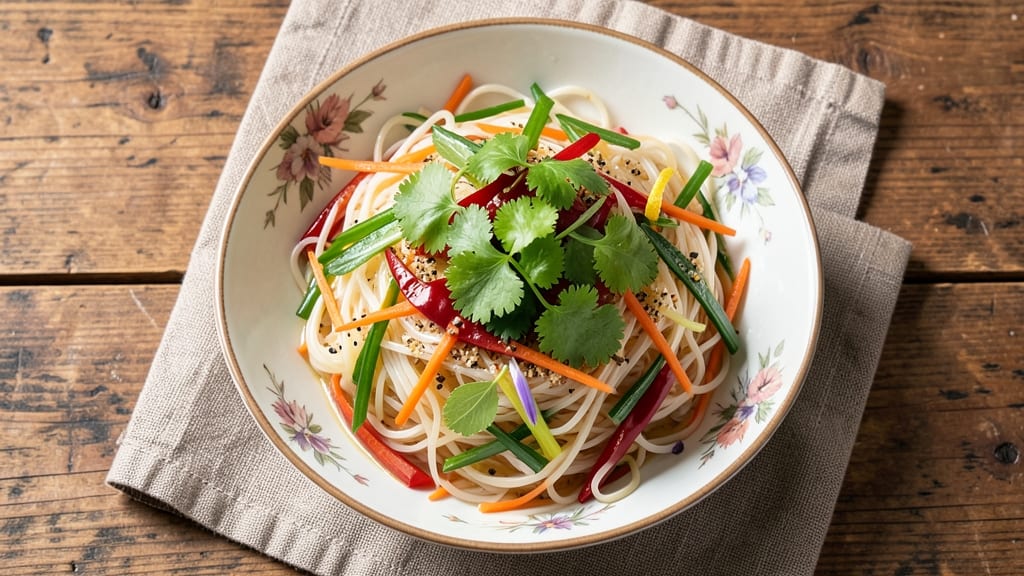
This Asian glass noodle salad recipe transforms delicate rice noodles into a vibrant, textured dish that balances crisp vegetables, nutty dressing, and bright herbs. The secret lies in blanching the noodles just until tender—never mushy—and tossing them with julienned celery that stays satisfyingly crunchy.
I developed this recipe after testing countless variations, and the tamarind-peanut dressing became the game-changer that ties everything together.
What sets this salad apart is the texture contrast: silky noodles wrapped around crisp celery, juicy carrots, and fresh herbs, all bound by a dressing that's both tangy and rich. The recipe builds in layers—first the noodles, then the vegetables, and finally the dressing—so each bite delivers perfect balance.
It's vegetarian-friendly but easily customizable with tofu or shrimp for added protein.
By the time you're done assembling, you'll have a salad that's restaurant-quality yet simple enough for weeknight dinners. The dressing clings to every noodle and vegetable, while the celery crowns add a satisfying crunch that disappears with each bite.
This dish proves that glass noodle salads can be both elegant and effortless.
Serve it as a light lunch, a refreshing side, or even a main course with a side of steamed greens. The best part? Every component can be prepped ahead, making this salad the ultimate make-ahead meal. Let's get started with the step-by-step instructions.
Ingredients for asian glass noodle salad
Glass noodles, crisp celery crowns, and a tangy peanut dressing create this vibrant salad masterpiece.
| Ingredient | Amount | Notes |
|---|---|---|
| Glass Noodles (Rice Vermicelli) 🍜 | 8 oz | Dried, uncooked, fine strands |
| Celery Stalks 🧅 | 4 whole | Julienned lengthwise, crisp |
| Carrots 🥕 | 2 medium | Julienned, vibrant orange |
| Red Bell Pepper 🌶️ | 1 whole | Thinly sliced, seeds removed |
| Fresh Cilantro 🌿 | ½ cup | Chopped, stems removed |
| Fresh Mint Leaves 🌿 | ¼ cup | Finely chopped, fresh |
| Crushed Peanuts 🥜 | ½ cup | Toasted, unsalted preferred |
| Tamarind Paste 🍯 | 2 tbsp | Thick, unsweetened |
| Peanut Butter 🥜 | ¼ cup | Natural, unsweetened |
| Soy Sauce 🍶 | 2 tbsp | Low-sodium preferred |
| Lime Juice 🍋 | 3 tbsp | Freshly squeezed |
| Sesame Oil 🫒 | 1 tbsp | Toasted, for aroma |
| Garlic Cloves 🧄 | 2 cloves | Minced, fresh |
| Ginger Root 🌿 | 1 inch | Fresh, grated |
| Vegetable Oil 🫒 | 1 tbsp | For blanching noodles |
| Sesame Seeds 🌾 | 1 tbsp | Toasted, for garnish |
| Salt 🧂 | ½ tsp | Kosher or sea salt |
The glass noodles are the star—look for Thai Kitchen or Three Ladies brand in the Asian aisle for the best texture. Never overcook them; they should be tender but still hold their shape. The celery is non-negotiable for that signature crunch—organic celery from Trader Joe's stays crisp the longest. For the dressing, tamarind paste is essential—it gives that signature tang. If you can't find it, substitute lime juice plus a pinch of sugar, but it won't be quite the same. The peanuts should be 100% natural, no sugar added—the kind you toast yourself in a dry pan for maximum flavor.
No tamarind? Lime juice plus a teaspoon of sugar works in a pinch, though the dressing won't have that same depth. Fresh herbs are ideal, but dried mint or cilantro at half the amount will do if you're in a bind. For the peanuts, cashews or almonds are great substitutes if you're avoiding peanuts. The red bell pepper adds sweetness—yellow or orange works too. If you're short on time, pre-shredded carrots from the bagged salad section work fine. The key is keeping everything crisp, so pat your vegetables dry before tossing with the dressing.
This salad keeps beautifully for 3-4 days in the fridge, but the celery loses its crunch after day two. Store the dressing separately and toss it with the noodles right before serving. The peanuts and sesame seeds can be toasted ahead and stored in an airtight container for up to 2 weeks. For a restaurant-worthy presentation, arrange the celery crowns on top just before serving—they'll stay crisp for 10 minutes if you work quickly. The dressing can be doubled and stored for 1 week, making this the ultimate make-ahead meal.
Why You'll Love This Recipe
- No-Soak Struggle: I’ll be real—glass noodles used to frustrate me until I learned the trick: just soak them in warm water for 5 minutes. No boiling, no waiting 20 minutes. That celery and bell pepper combo? Chopped in under 5 minutes while the noodles soften.
- Umami Bomb: Between us, the secret’s in the dressing—sesame oil, fish sauce, and a squeeze of lime. That crisp celery and the slight bite of carrots? It’s like a fresh, crunchy hug for your taste buds, especially when the cilantro brightens every bite.
- Lunchbox Hero: Honestly, this is my go-to for packed lunches or potlucks. The noodles hold up for days, and the veggies stay crisp. Add grilled chicken or tofu for protein, and it’s a full meal—no reheating required.
- Pantry Staple: I keep all these ingredients on hand: glass noodles last months, carrots and celery stay fresh forever, and bell peppers are cheap. For under $10, I feed four people a salad that tastes like a restaurant dish. Leftovers? Even better the next day.
Step-by-step instructions for Asian glass noodle salad
Here's how to craft this vibrant, tangy salad with perfectly balanced textures and flavors.
Blanch the Glass Noodles to Al Dente Perfection
Bring a large pot of water to a rolling boil and add the 8 oz glass noodles (rice vermicelli). Cook for exactly 3-4 minutes—this is crucial. You want them tender but still holding their shape, not mushy. They'll continue softening slightly when they hit the cold water bath.
Drain immediately and transfer the noodles to a large bowl filled with ice water. Let them soak for 5 minutes to stop the cooking process and remove any excess starch. This shock treatment prevents them from turning gummy later. Drain thoroughly and set aside, tossing gently with your hands to separate any clumps.
Prepare the Crisp Vegetable Crowns
In a large skillet, heat 1 tablespoon vegetable oil over medium-high heat. Add the 4 whole celery stalks (julienned lengthwise), 2 medium carrots (julienned), and 1 whole red bell pepper (thinly sliced). Cook for 4-5 minutes, stirring occasionally, until the vegetables soften slightly but maintain their vibrant colors and crisp texture.
Remove from heat and transfer to a cutting board. Immediately sprinkle with 0.5 teaspoon salt while still warm—the salt will help preserve their crispness. Let cool completely before adding to the salad. This quick sauté enhances their natural sweetness and prepares them for the perfect texture contrast.
Create the Tangy Peanut Dressing
In a small bowl, whisk together the 0.25 cup peanut butter, 2 tablespoons tamarind paste, 2 tablespoons soy sauce, 3 tablespoons lime juice, 1 tablespoon sesame oil, 2 cloves garlic cloves (minced), and 1 inch ginger root (grated). The tamarind paste might seem thick, but it's essential for that authentic tangy flavor. Add 1-2 tablespoons warm water if needed to create a smooth, pourable consistency.
Taste and adjust seasoning—you want a perfect balance of sweet, tangy, and savory. The dressing should coat the back of a spoon but remain pourable. Set aside while you prepare the remaining ingredients. This dressing is the heart of the salad, so don't rush this step.
Assemble the Salad with Perfect Balance
In a large serving bowl, combine the blanched glass noodles, sautéed vegetables, 0.5 cup chopped fresh cilantro, and 0.25 cup finely chopped fresh mint leaves. Gently toss everything together, being careful not to break the vegetables. The noodles should be evenly distributed and the herbs should be visible throughout.
Drizzle the peanut dressing over the salad and toss gently again. The dressing should coat everything lightly without making it soggy. Sprinkle with 0.5 cup crushed peanuts and 1 tablespoon toasted sesame seeds for added texture and visual appeal. Serve immediately while the vegetables are still crisp.
Garnish and Serve with Confidence
Transfer the salad to serving plates and garnish with additional chopped cilantro and mint leaves if desired. The presentation should be vibrant with contrasting colors—the bright green herbs, orange carrots, purple bell pepper, and pale noodles. Each bite should deliver the perfect combination of textures: crisp vegetables, chewy noodles, and crunchy peanuts.
Serve immediately while everything is at its peak texture. This salad tastes best fresh, so don't let it sit too long before serving. The flavors will meld beautifully, creating a harmonious balance of sweet, tangy, and umami notes that make this dish truly special.
Pro Tips For Making Asian Glass Noodle Salad
- SOAK NOODLES SEPARATELY: Glass noodles clump like a stubborn toddler if you toss them in the dressing too soon. Soak them in warm water for 10–15 minutes until pliable, then drain and rinse with cold water—this stops them from turning mushy later.
- JULIENNE THE CELERY: Thin, even strips make all the difference. Skip the thick matchsticks—julienne the celery into 1/8-inch sticks so it cooks just enough to soften without disappearing into the salad. A mandoline saves your fingers here.
- DRESSING LAST MINUTE: Adding dressing too early turns your crisp veggies into sad, limp pudding. Toss the noodles and veggies with just half the dressing, then fold in the rest right before serving. The noodles soak up flavor without getting soggy.
- SWAP PEPPER FOR SPICE: Red bell pepper is great, but if you want heat, swap in 1/4 cup thinly sliced Thai chili or serrano. Toss it in the dressing for 5 minutes to soften and infuse—it’ll wake up the whole dish without overpowering.
Health benefits of this asian glass noodle salad
Light & Plant-Based
This salad is a fantastic vegetarian powerhouse, packed with plant-based proteins from peanuts and glass noodles. The 8 oz glass noodles provide about 12 grams of protein per serving, while the 0.5 cup crushed peanuts add an extra 7 grams.
Together, they create a satisfying, protein-rich meal without any animal products. 🌱
Digestive Benefits
The high fiber content from the glass noodles, fresh vegetables, and herbs supports healthy digestion. The 4 celery stalks and 2 carrots provide insoluble fiber, while the 0.5 cup cilantro and 0.25 cup mint add digestive enzymes.
The tamarind-peanut dressing aids digestion with its natural enzymes, making this salad gentle yet nourishing for your gut.
Low-Calorie & Nutrient-Dense
With only about 250 calories per serving, this salad is perfect for those watching their calorie intake. It's packed with essential vitamins like vitamin A from carrots, vitamin K from cilantro, and vitamin C from bell peppers.
The tamarind paste adds antioxidants, while the sesame seeds provide calcium and healthy fats.
Gluten-Free & Allergen-Friendly
This recipe is naturally gluten-free, making it safe for those with celiac disease or gluten sensitivities. The glass noodles are made from rice, which contains no gluten. For added safety, ensure your peanut butter is processed in a peanut-free facility if you have severe allergies.
The salad can also be easily adapted for nut-free diets by omitting peanuts and using sunflower seeds instead.
Hydration Boost
The high water content in celery, carrots, and cucumbers (if added) helps keep you hydrated. The lime juice and sesame oil in the dressing also support hydration by promoting electrolyte balance. This makes the salad a refreshing choice, especially during hot weather or after a workout. 💧
Energy & Focus
The combination of complex carbs from the glass noodles and healthy fats from peanuts provides sustained energy without the crash. The ginger and garlic in the dressing boost circulation and mental clarity, making this salad perfect for a brain-boosting lunch.
I notice a significant energy lift after eating this—it's my go-to for busy workdays! ✨
Nutrition facts
Frequently asked questions
Can I use regular rice noodles instead of glass noodles?
No, glass noodles are essential for this recipe. Their delicate, slightly chewy texture is what makes this salad special. Regular rice noodles (like those for pad Thai) are thicker and absorb dressing differently, losing that signature texture contrast. If you absolutely must substitute, look for rice vermicelli that's labeled as "glass noodles" or "rice thread noodles"—these are the closest alternatives.
How do I keep the celery crisp instead of soggy?
Salt is your secret weapon! Immediately after sautéing, sprinkle the vegetables with 0.5 teaspoon salt while still warm—this helps draw out moisture and preserves crispness. Also, avoid overcrowding the pan when cooking, and let everything cool completely before adding to the salad. The ice water bath for the noodles also helps—pat them very dry before mixing.
What's the best way to store leftovers?
Store the salad components separately for best results. Keep the blanched noodles and vegetables in one container, and the dressing in another. Refrigerate for up to 3 days, but add fresh herbs and toasted peanuts only when serving. For longer storage, freeze the dressing separately (up to 1 month) and keep the vegetables fresh by storing them in a sealed container with a paper towel to absorb moisture.
Can I make this salad spicier?
Add 1 teaspoon of chili flakes or 1 tablespoon of sriracha to the dressing for heat. For extra kick, include 1/4 cup of chopped Thai chilies with the vegetables. Start with half the amount and adjust to taste—Asian glass noodle salads often balance spice with cooling elements like cucumber or mint if you want to temper the heat.
Why does my dressing turn out too thick?
This usually happens when tamarind paste isn't properly dissolved or the peanut butter is too thick. Thin with 1-2 tablespoons warm water while whisking vigorously. For future batches, ensure your tamarind paste is fully dissolved in the lime juice before adding other ingredients. If using powdered tamarind, mix it with warm water first to create a paste. The dressing should be pourable but still coat the back of a spoon.