Salads
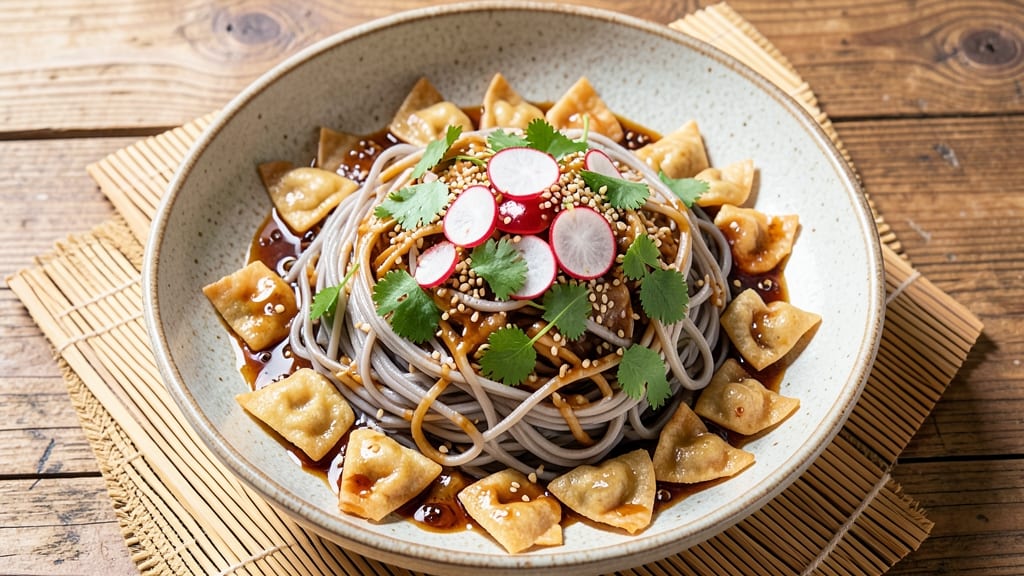
This Asian soba noodle salad delivers crispy wonton strips and a tangy sesame dressing that transforms simple ingredients into a restaurant-worthy dish.
The secret lies in perfectly cooked soba noodles—either tender-boiled or chilled for that signature bite—paired with a dressing that balances sweet, salty, and umami flavors without overpowering the fresh vegetables.
I developed this recipe to create a meal that’s both vibrant and satisfying, with optional protein additions like tofu or shrimp for extra depth.
The foundation of this salad is the tangy sesame dressing, made with sesame oil, soy sauce, rice vinegar, and a touch of honey or maple syrup for balance. The crispy wonton strips add a satisfying crunch, while shredded cucumber, edamame, and scallions bring freshness and texture.
For a vegetarian version, simply omit the protein or use plant-based alternatives like marinated tofu or crispy baked tempeh. The dish comes together in just 15 minutes, making it ideal for weeknight dinners or meal prep.
What makes this soba noodle salad truly special is its adaptability—it’s light enough for summer but hearty enough for a full meal. The dressing clings to the noodles and vegetables, creating a cohesive bite with every forkful.
Whether you’re serving it as a side or a main, the combination of textures and flavors ensures it’s always a crowd-pleaser. Ready to elevate your salad game? Let’s get started.
For those watching their sodium intake, you can reduce the soy sauce or use a low-sodium version without sacrificing flavor. The recipe also works beautifully with vegan soba noodles, ensuring it’s inclusive for all dietary preferences.
The key to success is balancing the dressing and toppings—don’t overcrowd the bowl, or the crispy wonton strips will lose their texture. Trust me, the first bite is worth the effort.
Ingredients for asian soba noodle salad
Crispy wontons, tangy dressing, and fresh veggies—this salad balances textures perfectly for a restaurant-worthy bite.
| Ingredient | Amount | Notes |
|---|---|---|
| Soba Noodles 🍜 | 8 oz | Dried or pre-cooked, buckwheat or 100% vegan |
| Wonton Wrappers 🥟 | 12 pieces | Square, for crispy strips |
| Sesame Oil 🫒 | ½ cup | Toasted, for dressing |
| Rice Vinegar 🍶 | ¼ cup | Seasoned preferred |
| Soy Sauce 🥢 | ¼ cup | Low-sodium if preferred |
| Maple Syrup 🍯 | 1 tbsp | Or honey for non-vegan |
| English Cucumber 🥒 | 2 whole | Seedless, peeled and sliced |
| Edamame 🌱 | 1 cup | Shelled, frozen works |
| Scallions 🧅 | ¼ cup | Thinly sliced, green parts |
| Sesame Seeds 🌿 | 1 tbsp | Toasted for garnish |
| Vegetable Oil 🫒 | ½ cup | For frying wontons |
| Salt 🧂 | ½ tsp | Kosher or sea salt |
| Black Pepper 🌶️ | ¼ tsp | Freshly ground |
| Lemon Juice 🍋 | 1 tbsp | Freshly squeezed |
The soba noodles are the heart of this dish—100% buckwheat for authentic flavor, but vegan versions work too. Trader Joe's carries great pre-cooked options if you're short on time. For the wonton wrappers, King Noodle or store-brand work fine, just avoid the ones with fillings. Look for wrappers that are thin but sturdy enough to hold their shape during frying. The edamame? Frozen shelled is perfect—no need to thaw, just toss in after cooking. Fresh scallions add brightness, but dried will work in a pinch if you're really in a bind.
No sesame oil? Toasted peanut oil mimics the nutty depth, though it won't have that signature aroma. Short on maple syrup? Agave nectar or a tiny bit of brown sugar keeps things balanced. The cucumber should be crisp—if yours feels soft, soak slices in ice water for 10 minutes to revive them. For extra crunch, add thinly sliced jicama or bell pepper strips. The dressing ratio is key: start with the amounts listed, then adjust to taste—more vinegar for tang, more maple for sweetness. And trust me, toasting the sesame seeds in a dry pan for 30 seconds before adding them elevates everything.
Wonton strips stay crispy for about 20 minutes if stored in an airtight container—keep them separate from the dressing to prevent sogginess. The dressing keeps for 5 days in the fridge, though it's best used within 3. For meal prep, store components separately: noodles, veggies, dressing, and wontons in individual containers. Re-crisp wontons by frying for 1-2 minutes before serving. This salad tastes even better the next day as flavors meld—perfect for packing lunches.
Why You'll Love This Recipe
- No-Cook Crunch: I swear by the wonton wrappers here—they’re like crispy little edible chips that take zero effort. Just toast them until golden, and boom, instant texture without chopping a single thing.
- Umami Magic: That sesame oil and soy sauce combo? It’s the secret weapon. One drizzle ties everything together—nutty, salty, and just a little funky, like a warm hug for your taste buds.
- Lunchbox Hero: Between us, this salad holds up perfectly for days. Pack it in jars for work or school—those noodles stay al dente, and the dressing won’t pool. My college-aged kid lives on this.
- Pantry Stash: Honestly, I keep soba noodles and wonton wrappers on hand just for this. They’re cheap, shelf-stable, and transform into something way fancier than takeout. Budget win, flavor flex.
Step-by-step instructions for Asian soba noodle salad
Here's how to assemble this refreshing salad with crispy wonton strips and vibrant sesame dressing.
Prepare the Crispy Wonton Strips
Cut the 12 wonton wrappers into thirds using kitchen shears, creating 36 thin strips. In a small bowl, whisk together 0.5 cup vegetable oil, 0.5 tsp salt, and 0.25 tsp black pepper. Heat a large skillet over medium-high heat until shimmering hot.
Working in batches, carefully add the wonton strips to the hot oil. Fry for 1-2 minutes until golden brown and crispy, turning occasionally with tongs. Transfer to paper towels to drain excess oil. The strips should maintain their crispness throughout the salad assembly—this is your secret to that satisfying crunch in every bite.
Cook and Prepare the Soba Noodles
If using dried soba noodles, cook 8 oz in boiling salted water for 4-5 minutes until al dente. Drain immediately and rinse under cold water to stop the cooking process and remove excess starch. For pre-cooked noodles, simply rinse with cold water to refresh.
Spread the cooled noodles on a baking sheet and toss with 1 tbsp sesame oil. This light coating prevents them from sticking and adds subtle flavor. Let them cool completely before assembling the salad—warm noodles will make the dressing too watery and dilute the flavors.
Assemble the Fresh Vegetable Components
Peel and slice the 2 English cucumbers into ¼-inch thick half-moons. Trim the ends from the 1 cup edamame and blanch in boiling water for 30 seconds if using frozen. Drain and cool under cold water. Thinly slice the 0.25 cup scallions, separating the green and white parts for visual contrast.
Arrange all components on a large platter: the cucumber slices should form the base, followed by the edamame, and finally the scallions scattered on top. This layering creates visual appeal while keeping each ingredient distinct in texture and flavor.
Create the Tangy Sesame Dressing
In a small bowl, whisk together 0.5 cup sesame oil, 0.25 cup rice vinegar, 0.25 cup soy sauce, 1 tbsp maple syrup, and 1 tbsp freshly squeezed lemon juice. The dressing should have a smooth, velvety consistency—if it's too thick, add 1 tablespoon of cold water at a time until it reaches a pourable state.
Taste and adjust seasoning: add more soy sauce for saltiness, rice vinegar for tang, or maple syrup for sweetness. The dressing should balance all flavors perfectly—this is where the salad's signature zing comes from. Keep it separate until ready to serve.
Combine and Garnish for Serving
Gently toss the cooled soba noodles with half of the crispy wonton strips, reserving the remaining strips for garnish. Add the cucumber, edamame, and scallions to the noodles, mixing lightly to combine. Drizzle half of the dressing over the salad and toss gently to coat.
Divide the salad among 4 serving plates, topping each with remaining wonton strips and 1 tbsp toasted sesame seeds. Serve immediately while the wonton strips are still crisp. The contrast of warm, crispy wontons with cool, refreshing vegetables and the tangy dressing makes this salad truly special.
Pro Tips For Making Asian Soba Noodle Salad
- SOAK NOODLES SEPARATELY: If you’re using buckwheat soba (not the pre-cooked kind), soak them in warm water for 10-12 minutes instead of boiling—this keeps them chewy, not mushy. I learned this the hard way after serving a batch that turned into a sad, limp pile. Drain and rinse immediately after soaking to stop cooking.
- CRUSH WONTON WRAPPERS: Skip the chopping—tear wonton wrappers into irregular chunks by hand. They’ll crisp up faster and add texture without looking like uniform squares. My first attempt with a knife ended in tiny, uniform pieces that soaked up dressing like sponges. Rough edges = better bite.
- TEMPER SESAME OIL: Add sesame oil last and toss gently—it burns off if heated. A splash in the dressing is fine, but if you’re drizzling it over hot noodles, wait until everything’s off the heat. I once ruined a batch by tossing it in too early, and the aroma vanished. Smell is flavor, don’t lose it.
- BALANCE THE DRESSING: Mix soy sauce and rice vinegar in a 2:1 ratio (soy to vinegar) and taste before adding sesame oil. The vinegar cuts the saltiness, but too much makes the dish taste like it’s swimming in pickles. Start with 1 tablespoon soy, ½ tablespoon vinegar, and adjust—your mouth will thank you.
Regional styles of this recipe
Japanese Zaru Soba Style
For an authentic Japanese-inspired twist, serve your soba salad in a chilled stone bowl (zaru) and use a dipping sauce (tsuyu) made with 1 tbsp dashi powder, 1 tbsp mirin, and 1 tbsp soy sauce.
Thinly slice 1/4 cup shiso leaves and scatter over the top for a bright, herbal note. Traditional zaru soba uses cold buckwheat noodles, so cook them slightly firmer (3-4 minutes) and chill for 30 minutes before assembling. 🍜
Korean Bibimbap-Inspired
Add a Korean flair by incorporating kimchi and spicy gochujang dressing. Mix 1/4 cup finely chopped kimchi with the cucumber and edamame, then drizzle with a sauce made from 1 tbsp gochujang, 1 tsp soy sauce, 1 tsp honey, and 1 tsp sesame oil.
Top with fried egg (runny yolk preferred) and extra sesame seeds for a hearty, spicy variation. 🌶️
Thai-Inspired Spicy Peanut
Swap the sesame dressing for a Thai-inspired peanut sauce: blend 1/4 cup smooth peanut butter, 1 tbsp soy sauce, 1 tbsp lime juice, 1 tsp sriracha, and 1 tsp honey with 2 tbsp warm water.
Toss with the noodles and veggies, then garnish with crushed peanuts and cilantro. For protein, add grilled shrimp or crispy tofu cubes. 🥜
Chinese Dan Dan Noodle Fusion
Infuse the salad with Sichuan flavors by adding 1 tbsp chili oil to the dressing and topping with crushed peanuts and pickled mustard greens (ya cai).
For extra depth, stir-fry 1/4 cup ground pork or tofu with 1 tsp doubanjiang (chili bean paste) and 1 tsp soy sauce before mixing into the salad. The spicy, nutty contrast creates a bold fusion dish. 🔥
Vietnamese Fresh Herb Twist
Brighten the salad with Vietnamese herbs by adding 1/4 cup mint leaves, 1/4 cup Thai basil, and 2 tbsp crushed peanuts.
Replace the sesame dressing with a fish sauce dressing: mix 2 tbsp fish sauce, 1 tbsp lime juice, 1 tbsp sugar, and 1 tsp sesame oil. For protein, use grilled shrimp or chicken slices.
The fresh herbs and tangy dressing create a lighter, herb-forward version. 🌿
Nutrition facts
Frequently asked questions
Can I use regular wheat noodles instead of soba?
While you can substitute wheat noodles, you'll lose the authentic earthy flavor and nutty undertones of soba. For a closer match, use brown rice noodles or look for buckwheat blends. If you must use wheat, increase the sesame oil in the dressing to 0.75 cup to compensate for the milder base flavor.
How do I make this salad vegan?
Start with 100% buckwheat soba noodles (check labels) and use vegan soy sauce or tamari. Replace honey/maple syrup with agave or 1 tbsp more rice vinegar for sweetness. For protein, add marinated tofu or baked tempeh. The sesame dressing remains vegan as-is since it only contains plant-based ingredients.
Why are my wonton strips soggy?
Soggy wontons happen when they absorb moisture from the dressing or noodles. Keep them separate until serving, and fry them fresh if reheating. For extra crispiness, double-fry: fry once until golden, drain, then fry again for 30 seconds before adding to the salad. Store them in a single layer on paper towels to maintain crunch.
Can I make this ahead of time?
Yes! Prep all components separately: cook and cool the noodles, make the dressing, and blanch veggies. Store in airtight containers for 3 days. When ready to serve, assemble and add crispy wontons last-minute. For best texture, fry wontons fresh and toss with the salad just before eating.
What's the best way to adjust the dressing for heat?
For spicier versions, add 1 tsp sriracha or 0.5 tsp chili flakes to the dressing. For a milder kick, reduce the soy sauce by 1 tbsp and add 1 tsp honey instead. For extra heat, serve with chili crisp on the side so everyone can adjust to taste.