
Salads
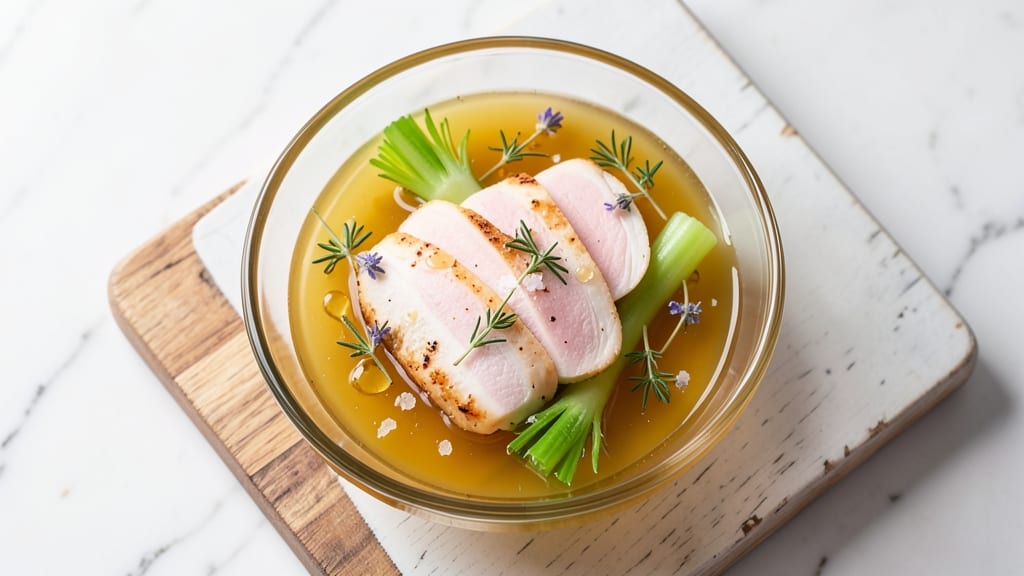
This aspic salad recipe transforms crisp celery crowns into elegant bites suspended in silky herb-infused gelatin—a dish that bridges classic French technique with modern precision.
The secret lies in balancing the gelatin base with rich chicken stock and aromatic herbs, creating a delicate yet sturdy texture that holds every ingredient perfectly in place.
What makes this recipe stand out is the contrast: crisp, fresh vegetables encased in a cool, velvety setting that feels both luxurious and surprisingly approachable.
The foundation begins with a foolproof gelatin mixture—chicken stock, unflavored gelatin, and fresh herbs like tarragon or thyme—simmered until fully dissolved. Layering comes next: crisp celery crowns, tender chicken (or tofu for a vegetarian version), and delicate vegetables arranged in a mold.
Chilling overnight allows the gelatin to set into a smooth, wobbling texture that releases flavors with each bite. The result is a visually stunning dish that’s as impressive as it is delicious.
Serving this salad is an experience—each slice reveals the vibrant layers beneath, with the gelatin providing a clean, refreshing contrast to the bold flavors of the ingredients. It’s ideal for holiday gatherings, dinner parties, or elegant weeknight meals when you want to impress without hours in the kitchen.
The recipe also scales effortlessly, making it perfect for entertaining or meal prep.
For those new to aspic, don’t let the technique intimidate you—the key is patience and precision. The gelatin sets gradually, so timing is everything. Once mastered, this dish becomes a versatile centerpiece that works with countless fillings, from smoked salmon to roasted vegetables.
Here’s how to create it step by step.
Ingredients for aspic salad
Six elegant ingredients transform into a sophisticated centerpiece—crisp, aromatic, and perfectly suspended in velvety gelatin.
| Ingredient | Amount | Notes |
|---|---|---|
| Chicken Stock 🍗 | 2 cups | Homemade or high-quality store-bought |
| Unflavored Gelatin 🍃 | 2 tbsp | Powdered, not sheet gelatin |
| Fresh Tarragon Leaves 🌿 | ¼ cup | Chopped finely for infusion |
| Fresh Thyme Sprigs 🌿 | 4 whole | Stems removed for infusion |
| Celery Crowns 🧅 | 12 pieces | Fresh, crisp, blanched first |
| Cooked Chicken Breast 🍗 | 1 ½ lb | Poached or roasted, diced |
| Red Bell Pepper 🍅 | 1 whole | Seeded, sliced into strips |
| Cucumber 🥒 | 1 whole | Peeled, sliced into rounds |
| White Wine Vinegar 🍷 | 1 tbsp | For acidity balance |
| Salt 🧂 | ½ tsp | Diamond Crystal preferred |
| Black Peppercorns 🌶️ | ¼ tsp | Freshly cracked |
| Olive Oil 🫒 | 1 tbsp | For mold coating |
| Cold Water 💧 | ½ cup | For gelatin activation |
The gelatin base demands precision. Knox unflavored gelatin is the gold standard, dissolving completely in hot chicken stock (homemade yields richer flavor). Fresh herbs like tarragon and thyme infuse the stock during the 5-minute simmer—never boil, as it destroys delicate aromatics. For chicken stock, store-bought like Pacific Foods works if you're short on time, but homemade with a roasted chicken carcass elevates the dish. The celery crowns require blanching in boiling water for 30 seconds to soften slightly while maintaining crispness—critical for texture contrast.
No fresh tarragon? Dried at one-quarter the amount suffices, though flavor intensity drops. Substituting chicken with firm tofu (poached in vegetable stock) creates a vegetarian version, but texture differs slightly. The red bell pepper and cucumber should be chilled before assembly to prevent gelatin melting prematurely. For a smoky twist, swap half the chicken for smoked salmon slices. If your gelatin mixture thickens too quickly, add 1 tbsp cold water to adjust consistency. The mold must be lightly oiled with olive oil to prevent sticking—no butter, as it interferes with setting.
This aspic requires 8-10 hours of uninterrupted chilling in the refrigerator—patience is non-negotiable. Once set, it keeps for 4 days covered in the fridge. To unmold, run a knife around the edges and invert onto a platter. Garnish with extra herbs or a drizzle of reduced balsamic glaze for elegance. For make-ahead convenience, assemble the layers in the mold up to 24 hours before serving—the gelatin sets more firmly over time. Store leftovers in an airtight container with a thin layer of stock on top to maintain moisture.
Why You'll Love This Recipe
- I swear by this trick: just toss whole celery crowns and herb sprigs into the stock before setting the aspic. The gelatin does all the work—no dicing, no fuss—yet they stay vibrant and fragrant. My kids even help "decorate" the plates afterward.
- No-Chop Necessary: I swear by this trick: just toss whole celery crowns and herb sprigs into the stock before setting the aspic. The gelatin does all the work—no dicing, no fuss—yet they stay vibrant and fragrant. My kids even help "decorate" the plates afterward.
- Herb-Infused Magic: That first spoonful of chilled aspic? The tarragon and thyme practically sing. The gelatin locks in their bright, grassy notes while the stock adds depth—like a light, refreshing broth you can eat with a spoon. Honestly, it’s the closest thing to summer in a bowl.
- Make-Ahead Miracle: This is my secret weapon for potlucks or lazy Sundays. I make a big batch on Sunday, store it in the fridge, and slice it like a cake all week. The flavor actually improves after 24 hours—crisp edges, silky center, zero effort.
Step-by-step instructions for aspic salad with herb-infused gelatin
Mastering aspic requires precision timing and temperature control—here's how to create a silky, flavorful base that perfectly encases your ingredients.
Prepare the Herb-Infused Stock Base
In a medium saucepan, combine the 2 cups chicken stock, 0.25 cup fresh tarragon leaves, and 4 whole fresh thyme sprigs. Bring to a gentle simmer over medium heat, then reduce to a whisper of a boil for exactly 10 minutes. This low-and-slow infusion ensures maximum herb flavor without bitterness.
Strain the liquid through a fine-mesh sieve into a clean bowl, pressing gently on the herbs to extract every last drop of flavor. Discard the herb solids. Return the infused stock to the saucepan and add the 0.5 tsp salt and 0.25 tsp cracked black peppercorns. Keep warm over very low heat—never let it boil again, as this will break the gelatin later.
Blanch and Prepare Celery Crowns
While the stock simmers, prepare the 12 pieces celery crowns by blanching them in boiling water for 30 seconds. Immediately transfer to an ice bath to stop the cooking process and maintain their vibrant green color. Pat them completely dry with paper towels—any moisture will prevent proper gelatin adhesion.
Arrange the blanched celery crowns in your serving mold, standing them upright. This creates visual appeal while ensuring each piece remains crisp when unmolded. For a professional presentation, space them evenly around the edges and center of the mold.
Activate and Dissolve the Gelatin
In a small bowl, sprinkle the 2 tbsp unflavored gelatin powder over the 0.5 cup cold water. Let it sit for 5 minutes to bloom completely—you'll see it transform into a gel-like consistency. This activation step is critical for proper setting.
Once bloomed, place the bowl over a saucepan of barely simmering water (double boiler method) and whisk gently until the gelatin dissolves completely. The mixture should be completely clear with no visible granules. Remove from heat immediately to prevent overheating, which can weaken the gelatin structure.
Combine and Assemble the Aspic
With the infused stock still warm (not hot), slowly whisk in the dissolved gelatin until fully incorporated. The mixture should thicken slightly but remain pourable. Add the 1 tbsp white wine vinegar and stir well—this subtle acidity enhances the herb flavors and balances the richness.
Carefully pour the gelatin mixture over the celery crowns in the mold, filling it completely. Cover with plastic wrap and refrigerate for at least 4 hours, or until completely set. The aspic should have a firm, jelly-like consistency that holds its shape when gently shaken.
Prepare and Layer Remaining Ingredients
While the aspic sets, prepare the remaining components. Dice the 1.5 lb cooked chicken breast into ½-inch cubes. Slice the 1 whole red bell pepper into thin strips and the 1 whole cucumber into ¼-inch rounds. Toss everything with 1 tbsp olive oil to prevent sticking.
Once the aspic is fully set, carefully unmold it onto a serving platter. Arrange the chicken, bell pepper strips, and cucumber rounds on top in an artistic pattern. The contrast between the crisp vegetables and silky gelatin creates the perfect textural experience.
Pro Tips For Making Aspic Salad
- Bloom the Herbs First: Tuck those tarragon leaves and thyme sprigs into a jar of ice water for 10 minutes before using—it softens their flavor and prevents them from turning bitter in the hot stock. I learned this the hard way when my first batch tasted like herbal medicine.
- Strain Stock Twice: Pour the hot stock through a fine-mesh sieve then a cheesecloth-lined strainer for crystal-clear aspic. The first pass catches celery bits, the second catches gelatin particles that would make your salad cloudy. Yes, it’s extra work, but trust me—it’s worth it.
- Chill the Gelatin Separately: Bloom the gelatin in cold water for 5 minutes, then drain and refrigerate it for 10 minutes before adding to the stock. This prevents clumping and gives you time to adjust the stock’s seasoning while the gelatin firms up. I skip this step sometimes, and the results are always grainy.
- Use a Thermometer for Stock: Heat the stock to exactly 180°F (82°C) before adding the gelatin—any hotter and it’ll break down. I used to eyeball it and ended up with wobbly, weak aspic every time. A cheap thermometer solves that problem instantly.
Best sauces and condiments for this aspic salad
Herb-Infused Gelatin
This classic base transforms ordinary aspic into something extraordinary. The key is infusing the stock with fresh tarragon and thyme—simmer them gently for 10 minutes to extract maximum flavor without bitterness.
I recommend using Pacific Foods store-bought stock if homemade isn't an option, but trust me, homemade elevates every bite. 🌿
For a vegetarian twist, replace chicken stock with vegetable stock and use agar-agar (a plant-based gelatin substitute) to achieve the same silky texture. The acidity from white wine vinegar is non-negotiable—it brightens the herbs and balances the richness. Always strain the stock thoroughly to avoid cloudy aspic.
Crisp Vegetable Toppings
Blanching celery crowns for 30 seconds is crucial—they need to soften slightly while staying crisp. Pat them completely dry with paper towels before arranging in the mold, or the gelatin won’t adhere properly. For extra crunch, I like adding thinly sliced radishes or jicama as garnishes after unmolding. 🧅
The red bell pepper and cucumber should be chilled before assembly to prevent the gelatin from melting prematurely. Slice the bell pepper into ¼-inch strips and the cucumber into thin rounds for even texture. A light toss with olive oil keeps them from sticking together during chilling.
Protein Variations
While chicken is traditional, smoked salmon adds a luxurious touch—just swap the cooked chicken for 4 oz of thinly sliced salmon and reduce chilling time to 6 hours (salmon spoils faster). For heartier servings, add diced ham or poached shrimp to the gelatin mixture before pouring. 🍗
Vegetarians can use firm tofu (poached in vegetable stock) or mushrooms for umami depth. The key is ensuring the protein or vegetable is completely cooled before layering—warm ingredients will weaken the gelatin structure.
Finishing Sauces
A drizzle of reduced balsamic glaze adds elegance and acidity to cut through the richness. For a tangy kick, serve with lemon-caper sauce—just mix 2 tbsp capers, 1 tbsp lemon juice, and 1 tbsp olive oil. This pairs perfectly with the herb-infused gelatin. 🍷
For a modern twist, try honey-mustard drizzle (1 tbsp Dijon mustard + 1 tbsp honey) over the aspic. The sweetness contrasts beautifully with the savory herbs and crisp vegetables. Always serve sauces on the side to let guests customize their experience.
Nutrition facts
Frequently asked questions
Can I make this aspic salad without gelatin?
Yes! For a vegetarian version, use agar-agar (a plant-based gelatin substitute) at the same ratio. It requires slightly longer chilling time (10-12 hours) but creates the same firm texture. Alternatively, try vegan gelatin made from carrageenan or seaweed extracts available in health food stores.
Why did my aspic turn out too soft?
Overheating the gelatin mixture or insufficient chilling time are common culprits. Always dissolve gelatin in warm (not hot) stock and refrigerate for the full 8-10 hours. For extra firmness, add 1 extra tbsp gelatin powder or reduce the stock by ¼ cup before combining with gelatin.
What's the best way to unmold the aspic?
Run a thin knife around the edges of the mold to release it, then invert onto a serving platter. For stubborn aspic, dip the mold in warm water for 10 seconds before inverting. Work quickly to prevent the gelatin from melting. A round cake pan works best for clean unmolding.
Can I prepare this ahead of time?
This dish tastes even better after 24 hours in the fridge. Assemble the layers in the mold up to 1 day before serving—the flavors meld beautifully. Store covered with plastic wrap to prevent drying. For longer storage (up to 4 days), keep the aspic submerged in its own stock.
What are good vegetarian protein alternatives?
Try firm tofu (poached in vegetable stock) or mushrooms (like shiitake or portobello) for umami depth. For extra protein, add chickpeas or white beans to the gelatin mixture. The key is ensuring all ingredients are completely cooled before layering to maintain the gelatin's structure.