
Salads
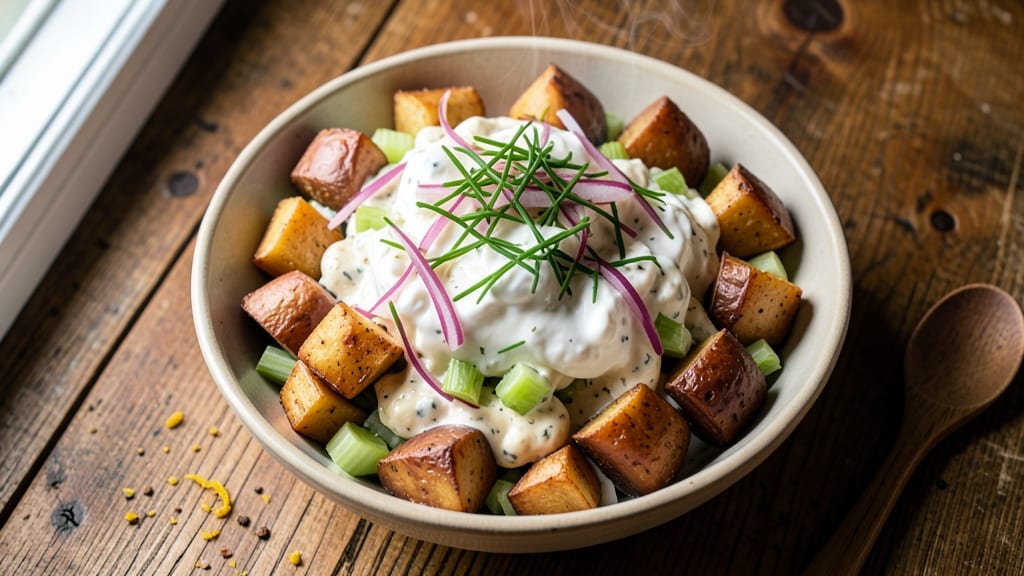
This baked potato salad recipe with sour cream transforms simple ingredients into a creamy, herby masterpiece that’s perfect for picnics, potlucks, or summer gatherings. The secret lies in warm, tender potatoes tossed with a tangy sour cream dressing that binds everything together—no mayo required.
I’ve perfected this version over years of testing, ensuring the right balance of creaminess, texture, and bold flavors that keep everyone reaching for seconds.
The beauty of this recipe is its versatility—you can use store-bought roasted potatoes for convenience or bake them fresh for extra flavor. Chopped celery, red onion, and fresh herbs add crunch and brightness, while a touch of Dijon mustard lifts the dressing to restaurant-quality levels.
It’s foolproof, hearty enough to stand alone, and customizable with add-ins like bacon, chives, or a sprinkle of smoked paprika.
What you’ll end up with is a creamy, velvety salad where each bite delivers warm potato, cool sour cream, and fresh herbs in perfect harmony. The dressing clings to every bite, keeping the potatoes tender while adding a tangy contrast.
This isn’t your grandmother’s potato salad—it’s a modern twist that’s rich, satisfying, and packed with flavor without being heavy.
Best of all, it keeps well in the fridge for up to 3 days, making it ideal for meal prep. Serve it at room temperature for the best texture, or pack it in a cooler for outdoor events.
Pair it with grilled chicken, steak, or even a simple green salad for a complete meal. Let’s get started!
Ingredients for baked potato salad recipe with sour cream
Warm potatoes meet tangy sour cream—creamy, herby, and perfect for any gathering.
| Ingredient | Amount | Notes |
|---|---|---|
| Russet Potatoes 🥔 | 2 lb | Medium size, baked until tender |
| Sour Cream 🥛 | 1 cup | Full-fat for creaminess |
| Mayonnaise 🥫 | ½ cup | Optional for extra richness |
| Celery Stalk 🧅 | 2 whole | Chopped into small pieces |
| Red Onion 🧅 | ½ cup | Finely diced, about 1 medium |
| Fresh Chives 🌿 | ¼ cup | Chopped, for garnish |
| Fresh Parsley 🌿 | ¼ cup | Chopped, for brightness |
| Dijon Mustard 🍯 | 1 tbsp | For tangy depth |
| Lemon Juice 🍋 | 1 tbsp | Freshly squeezed |
| Salt 🧂 | 1 ½ tsp | Kosher or sea salt |
| Black Pepper 🌶️ | ½ tsp | Freshly ground |
| Garlic Cloves 🧄 | 2 cloves | Minced for flavor |
| Smoked Paprika 🌶️ | ½ tsp | Optional for smoky depth |
The potatoes are the star here. Russet potatoes are ideal—they’re starchy and hold up beautifully when baked. If you’re short on time, pre-baked potatoes from the grocery store work in a pinch, but fresh-baked ones give that restaurant-quality texture. Look for firm potatoes with no sprouts or soft spots. For extra flavor, I like to sprinkle them with a pinch of salt and a drizzle of olive oil before baking. The celery and red onion add crunch, so don’t skip chopping them finely—you want every bite to have that satisfying texture contrast.
No sour cream? Greek yogurt with a splash of lemon juice works in a bind, though it’ll be slightly tangier. Fresh herbs are a must, but if you’re out, dried parsley at half the amount will do. The Dijon mustard is non-negotiable—it’s what elevates this salad from basic to chef’s kiss. Want to make it heartier? Add crumbled bacon or diced ham—just cook it first so it doesn’t make the salad soggy. The smoked paprika is optional but adds a gorgeous smoky note that pairs perfectly with the sour cream.
This salad tastes even better the next day—honestly, the flavors meld into something magical. Store it in an airtight container in the fridge for up to 3 days. If you’re prepping for a picnic, pack it in a cooling bag with ice packs to keep it chilled. The potatoes stay tender, and the dressing clings beautifully. Double the batch—it disappears fast, especially when you’re serving it alongside grilled chicken or steak.
Why You'll Love This Recipe
- One-Pot Wonder: I swear, this salad takes maybe 15 minutes of hands-on work. You bake the potatoes whole, mix in the sour cream and mayo, and boom—no chopping mountains of veggies. The onions and celery just get diced quick while the oven does all the heavy lifting.
- Creamy Magic: That tangy sour cream and mayo combo? It’s the secret weapon. The potatoes stay fluffy, the dressing clings perfectly, and the red onion adds just enough bite to keep it interesting—not too sweet, not too bland.
- Picnic Table Star: Between us, this is my go-to for potlucks, tailgates, or lazy summer Sundays. It’s hearty enough to feed a crowd but still light enough that no one feels stuffed. Plus, it travels well—no soggy sides here.
- Budget-Friendly Leftovers: Russets are cheap, and this salad keeps perfectly for days. I’ll make a big batch for Sunday dinner, and it’s still my lunch by Wednesday. Honestly, the only thing you’ll regret is not making enough.
Step-by-step instructions for baked potato salad with sour cream
Here's how to create a velvety, herb-infused potato salad that keeps its warm spud flavor while staying creamy and satisfying.
Bake the Potatoes Until Fork-Tender
Preheat your oven to 375°F. Scrub the 2 lb russet potatoes clean and pierce each with a fork in several places. Place them on a baking sheet and bake for 45-50 minutes until a knife slides in easily and the insides are fluffy. The skin should be tender but not falling apart.
Here's the thing—don't skip the piercing. It prevents the potatoes from exploding in the oven and ensures even cooking. I like to flip them halfway through for uniform browning. Let them cool slightly before handling, but not completely—they'll be easier to work with when still warm.
Mix the Creamy Dressing Base
In a large mixing bowl, combine the 1 cup sour cream, 0.5 cup mayonnaise, 1 tbsp Dijon mustard, and 1 tbsp lemon juice. Add the 2 minced garlic cloves, 1.5 tsp salt, 0.5 tsp black pepper, and 0.5 tsp smoked paprika. Whisk until completely smooth and well blended.
This is where the magic happens. The mustard adds tang, the lemon brightens, and the smoked paprika gives subtle depth. I always mix these ingredients first—they need time to marry before combining with the warm potatoes. If you're using the optional mayonnaise, now's the time to add it for that extra richness.
Chop and Combine Vegetables
While the potatoes cool, finely dice the 2 whole celery stalks and 0.5 cup red onion. Chop the 0.25 cup fresh chives and 0.25 cup fresh parsley separately—you'll add these last for freshness. Add the chopped celery and onion to the dressing mixture and toss to combine.
Real talk: finely chopping the celery and onion is crucial. You want them small enough to disappear into the salad but not so fine they become mushy. I use a sharp chef's knife and cut in a rocking motion for even pieces. The parsley and chives go in later—their bright colors and fresh flavors should shine at the end.
Fluff Potatoes and Incorporate Dressing
When the potatoes are cool enough to handle, cut them open and remove the insides, discarding the skins. Place the potato flesh in a large bowl and gently fluff with a fork—you want to break it up but keep some texture. Add the celery-onion dressing mixture and toss until every bite is coated.
Don't overmix here. You're looking for a creamy, chunky texture—not mashed potatoes. The residual heat from the potatoes will help the dressing cling beautifully. If the salad seems too thick, add a splash of warm water or milk to loosen it to your preferred consistency.
Garnish and Serve Warm
Just before serving, sprinkle the chopped fresh chives and fresh parsley over the top. Give it one final toss to distribute the herbs evenly. The contrast of warm potatoes with cool herbs is what makes this salad so special.
This dish tastes best served warm, straight from the oven. The creamy dressing clings to the fluffy potatoes, and the herbs add that fresh finish. For extra flavor, serve with a sprinkle of additional smoked paprika or a side of crispy bacon. Enjoy immediately while the potatoes are still tender and warm!
Pro Tips For Making Baked Potato Salad Recipe With Sour Cream
- BOIL POTATOES UNTIL TENDER: Russet potatoes take longer than you think—cut them into even 1.5-inch chunks and test with a fork. I learned this the hard way when my first batch came out gummy because I rushed them.
- SALT THE BOILING WATER: This isn’t just for flavor—it keeps the potatoes from turning gluey. Use at least 1 tablespoon of salt per gallon of water, and add it before the potatoes go in.
- DICE CELERY SMALLER THAN YOU THINK: Big celery chunks feel like chewing on a twig. Cut them into 1/8-inch pieces so they blend into the salad instead of standing out.
- MIX SOUR CREAM LAST: Add it right before serving—otherwise, it’ll curdle if you toss everything together too early. Stir gently, like folding in whipped cream.
Common mistakes when making this recipe
Overcooking Potatoes
Baked potatoes are the foundation, so don't let them turn to mush! Once they reach 210°F internal temperature (about 45-50 minutes at 375°F), remove them immediately. Overcooked potatoes will collapse when mixed with dressing, creating a gloopy mess.
I've ruined this salad more times than I'd admit by leaving them in too long—trust the fork test: it should slide in easily but not fall apart. 🥔
Skipping the Cooling Step
Warm potatoes mixed with cold dressing create a science experiment you don't want to see. The dressing will curdle and separate, leaving you with a sad, lumpy salad. Let the potatoes cool to 100°F or below before combining with the dressing.
I usually spread them on a baking sheet to speed up cooling while I prep the other ingredients. Patience here pays off with a creamy, cohesive texture. ⏰
Using Cold Sour Cream
Cold sour cream straight from the fridge can make your dressing grainy and unappetizing. Let it sit at room temperature for 15-20 minutes before mixing. I keep a small bowl of sour cream on the counter while I bake the potatoes—this simple step prevents clumping and ensures a silky dressing.
If you're in a hurry, place the sealed container in warm water for 5 minutes to soften it up. 🥛
Chopping Vegetables Too Coarsely
Large chunks of celery or onion will create an uneven texture where some bites are crunchy and others are mushy. Aim for pieces no larger than ¼ inch—this ensures every bite has balanced texture.
I use a sharp chef's knife and cut in a rocking motion for even pieces. The goal is for the veggies to disappear into the salad without overpowering it. 🧅
Not Balancing Flavors
The dressing needs all its components to shine. Skipping the Dijon mustard or lemon juice makes the salad taste flat and one-dimensional. These ingredients cut through the richness of the sour cream.
I always taste the dressing before combining it with potatoes—if it needs more brightness, add another ½ tsp lemon juice. The herbs should be added last to preserve their freshness and vibrant color. 🌿
Underestimating Resting Time
This salad tastes even better after 30 minutes of resting in the fridge. The flavors meld together beautifully during this time, creating that restaurant-quality harmony. I know it's tempting to serve it immediately, but resisting those first bites pays off with deeper, more complex flavors.
If you're short on time, let it sit at room temperature for 15 minutes before serving—it still improves! ⏳
Nutrition facts
Frequently asked questions
Can I make this potato salad ahead of time?
This salad actually tastes better after 1-2 days in the fridge as the flavors meld. Store it in an airtight container and give it a good stir before serving. For picnics, pack it in a cooler with ice packs to keep it chilled and creamy. The warm potato flavor intensifies overnight, making it even more delicious.
What if I don't have fresh herbs?
No problem! Use ½ teaspoon dried parsley or ¼ teaspoon dried chives instead of fresh, but add them to the dressing first rather than garnishing at the end. For extra flavor, try 1 teaspoon dried dill or ½ teaspoon dried thyme. Fresh herbs add vibrant color, but dried ones still bring great flavor.
Can I substitute Greek yogurt for sour cream?
Yes, but it will be tangier. Use 1 cup plain Greek yogurt and add 1 extra tablespoon lemon juice to balance the flavor. For creaminess, stir in 2 tablespoons melted butter. The texture will be slightly lighter, but it still works beautifully—especially if you prefer a lighter option.
How do I make this salad spicier?
Add ½ teaspoon cayenne pepper or 1 teaspoon hot sauce to the dressing for heat. For smoky spice, increase the smoked paprika to 1 teaspoon. If you love kick, try adding ½ cup diced jalapeños (seeds removed) to the veggie mix. Always taste as you go!
What's the best way to reheat leftovers?
This salad isn't meant to be reheated—it's designed to be served warm or at room temperature. If you must, gently warm it in a saucepan over low heat with 1-2 tablespoons milk or broth to restore creaminess. Stir constantly to prevent drying out. It won't be as perfect as fresh, but it's still tasty.