
Salads
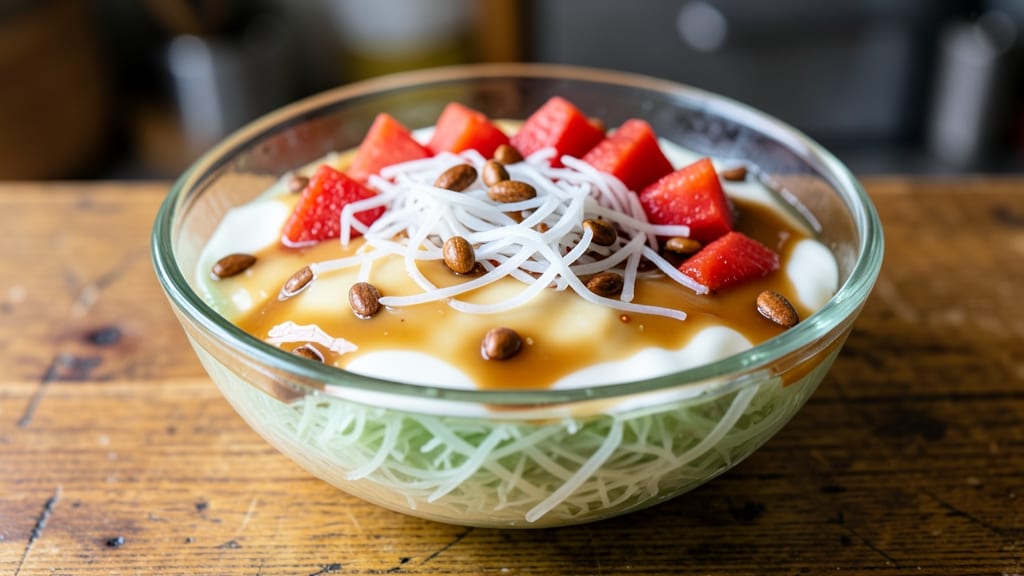
This buko salad recipe with ingredients and procedure delivers the perfect balance of tropical chewiness, creamy sweetness, and refreshing crunch—ideal for hot days or festive gatherings. 🌴 The secret lies in layering ingredients properly and chilling thoroughly, which transforms simple components into a dessert-like masterpiece that stays fresh for days.
Whether you're serving it as a light dessert or a refreshing snack, this recipe is a crowd-pleaser that requires minimal effort but maximum flavor impact.
The foundation of great buko salad starts with the right ingredients: young coconut gel (buko), sweetened condensed milk, and evaporated milk for creaminess, all balanced by crisp fruits like nata de coco, kaong (sugar palm seeds), and jackfruit.
The key to texture lies in the order of mixing—adding the buko last ensures it stays chewy rather than mushy. For extra flair, toasted coconut flakes or crushed pineapple add delightful crunch and visual appeal.
What sets this recipe apart is its versatility—serve it chilled as a dessert after meals, as a snack with a spoon, or even as a side dish with grilled meats. The chilling process is crucial; it allows the flavors to meld beautifully while keeping the buko perfectly firm.
With just 10 minutes of prep and 4 hours of chilling, you’ll have a restaurant-quality dish that’s ready whenever you are.
For best results, use ripe but firm buko and adjust sweetness to taste—some prefer it sweeter, while others like a subtle balance. This recipe scales easily, making it perfect for parties or meal prep. Let’s get started on creating your own tropical masterpiece!
Ingredients for buko salad recipe with ingredients and procedure
Tropical chewiness meets creamy sweetness in this crowd-pleasing dessert salad.
| Ingredient | Amount | Notes |
|---|---|---|
| Young Coconut Gel (Buko) 🥥 | 3 cups | Ripe but firm, cut into bite-sized pieces |
| Sweetened Condensed Milk 🥛 | 1 ½ cups | High-quality brand for creaminess |
| Evaporated Milk 🥛 | 1 cup | Full-fat preferred for richness |
| Nata de Coco 🍃 | 1 cup | Thinly sliced, drained |
| Kaong (Sugar Palm Seeds) 🌱 | ½ cup | Soaked overnight if dried |
| Jackfruit 🍠 | 1 cup | Young, firm pieces, canned or fresh |
| Crushed Pineapple 🍍 | ½ cup | Drained, for extra crunch |
| Toasted Coconut Flakes 🥥 | ¼ cup | Lightly toasted for aroma |
| Lime Juice 🍋 | 2 tbsp | Freshly squeezed for brightness |
| Granulated Sugar 🍚 | ¼ cup | Adjust to taste |
| Vanilla Extract 🌸 | 1 tsp | Pure extract for flavor |
| Ice Cubes ❄️ | ½ cup | For chilling texture |
The buko is the star—look for ripe but firm young coconut gel at Asian markets or specialty stores. Filipino or Thai brands like Golden Harvest or Thai Young Coconut are my go-tos. If you can't find fresh buko, canned versions work in a pinch, but drain them well. Nata de coco should be thinly sliced and drained—thicker slices stay chewier. For kaong, soak dried seeds overnight if using them; fresh ones are easier but harder to find. Jackfruit can be canned in water or syrup—drain and rinse if using syrup-packed to balance sweetness. Toast your coconut flakes in a dry pan until golden for that perfect aroma.
No kaong? Substitute with extra nata de coco or diced mango for similar texture. Can't find young coconut gel? Coconut jelly or extra crushed pineapple adds moisture without changing the vibe. Too sweet? Add more lime juice or a splash of vanilla. The condensed and evaporated milk combo is non-negotiable for that signature creaminess—don't substitute with powdered milk. For extra flair, add a sprinkle of crushed macadamia nuts or toasted sesame seeds on top. The ice cubes aren't just for texture—they help keep everything chilled while you layer everything.
This stays fresh for 3-4 days in the fridge, but tastes best after 4+ hours of chilling. Serve in individual glasses or bowls for that Instagram-worthy look. Portion into mason jars for easy grab-and-go snacks. The longer it chills, the better the flavors meld—trust the process. If making ahead, assemble everything except the buko, chill the base, then add buko just before serving to keep it chewy. Freezes surprisingly well too—just add a splash of milk to thawed portions to restore creaminess.
Why You'll Love This Recipe
- No-Chop Necessary: I swear by this—just scoop the buko, drain the kaong, and fold in the milks. No knife skills required, just layering textures like a pro.
- Creamy-Crunch Magic: That first bite? The buko’s jelly-like chew, the kaong’s pop, and the milks’ velvety sweetness—it’s like dessert and snack had a baby. Honestly, I’ve never met a combo that hits harder.
- Party in a Bowl: Bring it to potlucks, family gatherings, or even your own lazy Sunday. The nata de coco adds that fancy touch without extra effort—everyone thinks you slaved over it.
- Leftovers? Please: This keeps for days in the fridge, and the flavors actually deepened after sitting overnight. My go-to for when I’m too tired to cook but still want something special.
Step-by-step instructions for buko salad
Here's how to assemble this creamy, tropical dessert that stays fresh for days—every layer matters!
👨🍳 Step 1: Prepare the Coconut Base
In a large mixing bowl, combine the 3 cups Young Coconut Gel (Buko) with the 1.5 cups Sweetened Condensed Milk and 1 cup Evaporated Milk. I like to use a silicone spatula here—it helps gently fold the buko pieces without breaking them. Mix just until the milks are evenly distributed, leaving the buko intact for that perfect chewy texture. The mixture should look thick and creamy, with visible buko pieces throughout.
This is your foundation, so don't rush it. The condensed milk will start to thicken slightly as it mixes with the buko's natural juices. If you notice the sugar from the condensed milk crystallizing on the buko, that's normal—it just means your buko is fresh and absorbing the sweetness perfectly.
🥘 Step 2: Layer in the Tropical Add-Ins
Gently fold in the 1 cup Nata de Coco, 0.5 cup Kaong (Sugar Palm Seeds), 1 cup Jackfruit, and 0.5 cup Crushed Pineapple. I work in batches here—add about a third of each ingredient at a time and fold carefully to avoid crushing the delicate nata de coco or kaong. You want to maintain their distinct textures while distributing them evenly throughout the creamy base.
Here's where the magic happens: the kaong adds a delightful pop of texture, the jackfruit brings natural sweetness, and the pineapple adds a refreshing tartness. The nata de coco should remain in its thin strands—if you see any clumping, gently separate them with your fingers before adding to the mix.
🍳 Step 3: Finish with Aromatics and Chill
In a small bowl, whisk together the 0.25 cup Granulated Sugar, 1 tsp Vanilla Extract, and 2 tbsp Lime Juice until the sugar dissolves completely. This bright, citrusy mixture is what ties all the flavors together. Pour it over the buko mixture and gently fold in the 0.25 cup Toasted Coconut Flakes and 0.5 cup Ice Cubes. The ice cubes will help keep the texture cool and creamy as it chills.
I know it might seem like too much sugar, but trust me—it balances the natural sweetness of the buko and jackfruit while enhancing the tropical flavors. The lime juice adds that perfect zing that makes this dessert feel fresh and vibrant, not just sweet.
⏰ Step 4: Chill and Set for Perfect Texture
Cover the buko salad with plastic wrap and refrigerate for at least 4 hours, or preferably overnight. This chilling time is crucial—it allows all the flavors to meld together and the textures to develop properly. The buko will soften slightly while maintaining its chewy center, the nata de coco will become even more delicate, and the entire dessert will take on that perfect creamy consistency.
I like to give it this full chilling time because it makes a noticeable difference in the final texture. If you're short on time, you can chill for at least 2 hours, but the longer it rests, the better it tastes. The ice cubes will melt during this time, contributing to that luscious, cool texture we all love.
Pro Tips For Making Buko Salad Recipe With Ingredients And Procedure
- CHILL THE BUKO FIRST: Grab that bag of buko from the fridge and let it sit for 10 minutes before mixing—cold buko releases less water and keeps your salad from turning into a soggy mess. I learned this after watching my first batch pool like a milkshake within 30 minutes.
- DRAIN NATA WELL: Nata de coco soaks up liquid like a sponge. Drain it in a colander for 5 minutes after rinsing, then blot with a paper towel—this keeps your salad from curdling into a sticky puddle. (Yes, even if you’re impatient like me.)
- MEASURE MILK BY WEIGHT: Condensed and evaporated milk vary wildly in thickness. Use a kitchen scale for 1:1 ratio (e.g., 200g each) instead of eyeballing—this guarantees that creamy, not cloying, texture everyone loves. I skipped this once and ended up with a dessert that tasted like syrup.
- ADD KAONG LAST: Toss those sugar palm seeds in at the very end—they’re delicate and turn mushy if soaked in milk for too long. A quick sprinkle keeps them chewy and intact, just like they should be. (Your future self will notice the difference.)
Pro cooking tips for great buko salad recipe with ingredients and procedure
Layering Secrets
Add the buko last—this preserves its signature chewiness. I fold in the nata de coco and kaong first, then the jackfruit and pineapple, finishing with the buko. This order prevents the delicate nata from breaking down too soon, while the buko stays firm and intact.
For extra texture contrast, I sprinkle toasted coconut flakes on top right before serving. 🥥
Sweetness Balance
Start with the full 0.25 cup granulated sugar but taste as you go. The condensed milk already adds sweetness, so adjust with lime juice if needed. I find fresh lime works better than bottled—its acidity cuts through the richness beautifully.
For a lighter version, reduce sugar by 2 tbsp and add extra vanilla extract for depth.
Chilling Hacks
Use an ice cream scoop to portion chilled buko salad into glasses—it creates clean, restaurant-style servings. For faster chilling, place your mixing bowl in the freezer for 30 minutes before transferring to the fridge.
This jumpstarts the process while keeping the texture smooth. I always use glass containers—they maintain temperature better than plastic.
Texture Troubleshooting
If your buko turns mushy, it was overripe or overmixed. Look for buko with a firm, translucent center—it should bounce back slightly when pressed. For extra stability, add 1 extra tbsp gelatin dissolved in 2 tbsp hot milk to the coconut base before chilling.
This creates a firmer texture without changing flavor.
Flavor Boosters
Add ½ tsp pandan extract to the coconut base for an authentic Filipino touch. Or try 1 tbsp toasted sesame oil mixed with the lime juice for nutty depth.
For a modern twist, fold in ¼ cup whipped cream cheese after chilling—it adds tangy richness that pairs perfectly with the tropical flavors. ✨
Make-Ahead Magic
Prepare everything except the buko, then store the base separately in an airtight container for up to 2 days. When ready to serve, simply fold in the buko and chill for 2 hours.
This works perfectly for parties—just assemble the buko portions right before serving to keep them chewy. The flavors actually improve overnight, making it ideal for meal prep.
Nutrition facts
Frequently asked questions
Why does my buko salad turn too sweet?
The sweetened condensed milk already packs a punch, so start with the full 0.25 cup granulated sugar but taste as you go. Adjust by adding 1-2 tbsp lime juice or a splash of vanilla extract instead. For a lighter version, reduce sugar by 2 tbsp and use extra toasted coconut flakes for flavor without extra sweetness.
Can I make buko salad without coconut milk?
Yes! For a vegan version, replace the 1.5 cups sweetened condensed milk and 1 cup evaporated milk with 1.5 cups coconut cream (chilled overnight) plus 1 cup coconut milk. The texture will be slightly lighter but still creamy. For extra richness, add 2 tbsp coconut oil to the base before chilling.
How do I store leftover buko salad?
Transfer to an airtight container and refrigerate for up to 4 days. For best texture, keep the buko pieces separate until ready to serve—fold them in just before eating. To reheat (though it's best cold), microwave for 30 seconds while stirring, then let it sit for 2 minutes to redistribute the creaminess.
What's the best way to serve buko salad?
Portion into individual glasses or bowls for a restaurant-style presentation. Garnish with extra toasted coconut flakes and a lime wedge. Serve chilled as a dessert, snack, or side with grilled meats. For a fun twist, layer in mason jars with alternating colors (like red jackfruit and green nata de coco) for a visually stunning effect.
Can I use canned buko instead of fresh?
Drain canned buko thoroughly and pat dry with paper towels to remove excess liquid. For extra chewiness, add 1 tbsp cornstarch to the canned buko before mixing with the milk base. The starch helps maintain texture during chilling. Just be sure to use high-quality canned buko—avoid brands with added preservatives that may alter the flavor.