
Salads
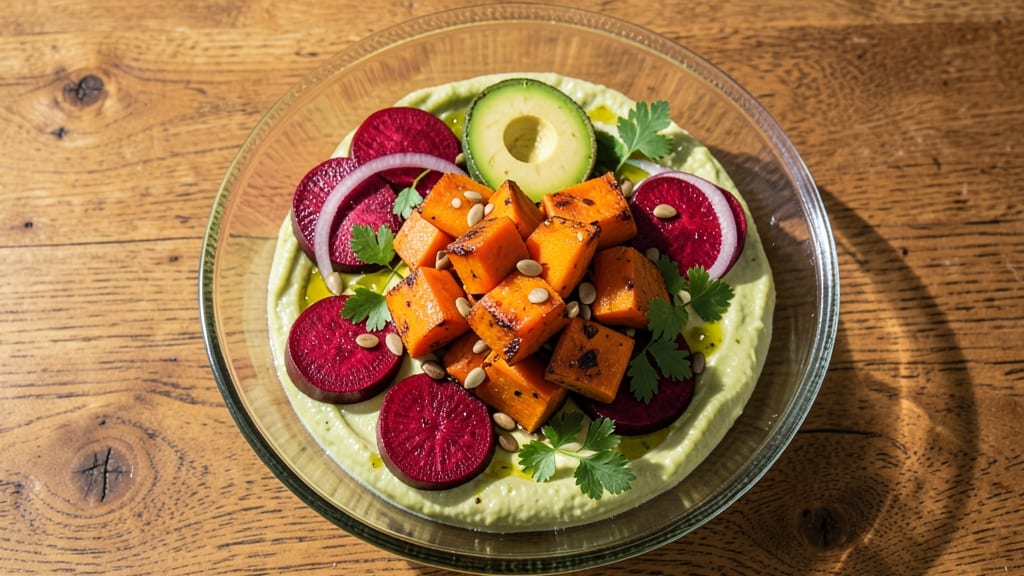
This butternut and beetroot salad recipe transforms seasonal vegetables into a vegan masterpiece with roasted sweetness and earthy crunch. I developed it after years of experimenting with autumn produce, seeking that perfect balance between tender roasted vegetables and crisp textures.
The key? Roasting the butternut squash and beets until caramelized yet still holding their shape—this creates that irresistible contrast with the salad's fresh elements.
What makes this salad special is its textural harmony: creamy avocado, crisp apples, and toasted nuts meet the tender roasted vegetables, all tied together with a bright citrus vinaigrette. I've tested this recipe with seasonal variations, from adding pomegranate seeds in winter to incorporating fresh herbs in spring.
The dressing is simple but essential—just olive oil, lemon juice, and a touch of maple syrup to complement the vegetables' natural sweetness.
The result is a visually stunning dish that's as nutritious as it is delicious. The roasted vegetables bring deep, caramelized flavors, while the raw elements add freshness and crunch.
This salad is perfect for autumn gatherings or as a hearty weeknight meal that feels special without requiring hours in the kitchen. It's also completely customizable—swap in seasonal fruits or nuts to keep it interesting all year round.
For best results, roast the vegetables until tender yet firm, and let the salad sit for 10 minutes before serving. This allows the flavors to meld and the dressing to penetrate every bite.
Whether you're serving it as a main course or a side dish, this butternut and beetroot salad will impress with its bold flavors and textural contrast. Let's get started!
Ingredients for butternut and beetroot salad
Roasted squash and beets meet creamy avocado and crisp apples in this vibrant vegan masterpiece.
| Ingredient | Amount | Notes |
|---|---|---|
| Butternut Squash 🎃 | 1 ½ lb | Cubed, peeled, medium dice |
| Beetroots 🍠 | 1 lb | Medium size, peeled, cubed |
| Extra-Virgin Olive Oil 🫒 | ½ cup | For roasting and dressing |
| Avocados 🥑 | 2 whole | Ripe, pitted, sliced |
| Apples 🍎 | 2 medium | Honeycrisp or Fuji, thinly sliced |
| Red Onion 🧅 | ¼ whole | Thinly sliced, red variety |
| Pecans 🌰 | ½ cup | Toasted, roughly chopped |
| Fresh Lemon Juice 🍋 | ¼ cup | Freshly squeezed |
| Pure Maple Syrup 🍯 | 1 tbsp | Grade B for depth of flavor |
| Sea Salt 🧂 | 1 tsp | Fine grain preferred |
| Fresh Thyme Leaves 🌿 | ¼ cup | Chopped, or dried thyme |
| Fresh Arugula 🌱 | 4 cups | Baby leaves preferred |
The star ingredients here are the butternut squash and beetroots—look for firm, vibrant produce at your local farmers market or Whole Foods. The squash should feel heavy for its size, and the beets should be smooth with no blemishes. I always buy organic when possible, especially for the beets, since their skins can be a bit tougher to peel. If you're short on time, pre-cut squash from the produce section works fine, but roasting whole cubes gives you that perfect caramelized edge. Costco often has great bulk options for both, saving you money while keeping quality high.
No fresh thyme? Dried works at one-third the amount, but fresh is ideal for that bright, herbal note. Honeycrisp apples are my go-to—they stay crisp and hold their shape beautifully, but any crisp apple will do. Pecans are pricey, so walnuts or almonds make great budget swaps, though they do change the texture slightly. The maple syrup adds depth, but if you're watching sugar, agave nectar works just as well. For the arugula, baby leaves are perfect, but regular arugula chopped finely will give you that same peppery bite. Pro tip: Taste your dressing before tossing—adjust the lemon or maple syrup to balance the natural sweetness of the roasted veggies.
Roasted vegetables keep for 4-5 days in the fridge, but they're even better the next day once the flavors meld. Store them in airtight containers with a paper towel to absorb any moisture. The avocado will brown faster, so slice it just before serving or toss with a little lemon juice to keep it fresh. This salad reheats beautifully—just warm the roasted veggies in a pan and toss with the dressing. For meal prep, I portion the roasted vegetables separately and assemble the salad fresh to keep everything crisp. It's a weeknight lifesaver that still feels special enough for company.
Why You'll Love This Recipe
- One-Pan Roast: I swear by roasting the squash and beets together—they caramelize into sweet, tender perfection while I chop the apples and toss the salad. No fancy equipment, just a sheet pan and 40 minutes of hands-off time.
- Sweet-Savory Magic: That earthy beetroot meets the nutty squash, then the creamy avocado and tangy apple cut through like a bright, fresh kiss. Honestly, the contrast is ridiculously satisfying—every bite feels balanced and exciting.
- Meal Prep MVP: Between us, this salad keeps for days in the fridge, and the flavors actually improve as the beets soften and the apples mellow. I pack it for lunches all week, and it’s still fresh-tasting by Friday.
- Budget Brightener: Butternut squash and beets are often cheaper than pre-cut salads or takeout, and avocados stretch further when you slice them thin. Plus, I use the same dressing for grain bowls too—zero waste, maximum flavor.
Step-by-step instructions for roasted butternut and beetroot salad
Here's how to transform simple ingredients into a vibrant, flavor-packed salad with perfect caramelized textures.
Roast the Vegetables Until Caramelized
Preheat your oven to 400°F and line two baking sheets with parchment paper. Toss the 1.5 lb butternut squash and 1 lb beetroots with 2 tablespoons of the 0.5 cup extra-virgin olive oil and ½ teaspoon of the 1 tsp sea salt. Spread them in a single layer, leaving space between each piece for even browning.
Roast for 25-30 minutes until the edges are deeply caramelized and the squash is fork-tender. Flip the vegetables halfway through cooking to ensure even browning. You'll know they're done when the beetroots have a glossy sheen and the squash yields slightly when pierced with a knife. Let them cool slightly before assembling the salad.
Toast the Pecans and Prepare the Dressing
While the vegetables roast, place the 0.5 cup pecans in a dry skillet over medium heat. Toast them for 5-7 minutes, stirring frequently, until they're fragrant and lightly golden. Remove from heat and let them cool completely before chopping roughly.
In a small bowl, whisk together the remaining 3 tablespoons extra-virgin olive oil, 0.25 cup fresh lemon juice, 1 tbsp pure maple syrup, and the remaining ½ teaspoon sea salt. This dressing should be emulsified but still pourable. Taste and adjust seasoning if needed—you want a balance of sweet, tangy, and savory.
Assemble the Salad with Fresh Ingredients
In a large bowl, combine the 4 cups fresh arugula, 2 whole avocados (sliced), 2 medium apples (thinly sliced), and 0.25 whole red onion (thinly sliced). Gently toss everything together, being careful not to bruise the avocado or apples. The arugula should be the base, with the other ingredients distributed evenly throughout.
Add the roasted butternut squash and beetroots to the bowl, along with the toasted pecans and 0.25 cup fresh thyme leaves. The thyme adds an earthy depth that complements the sweetness of the roasted vegetables. Toss everything lightly just before serving to prevent the avocado from browning.
Dress and Serve Immediately
Pour the dressing over the salad and toss gently to coat everything evenly. The warmth of the roasted vegetables will help the dressing cling to the leaves and other ingredients. Taste one last time and adjust seasoning if needed—sometimes a pinch more salt or a splash of lemon juice makes all the difference.
Serve immediately while the avocado is still vibrant and the pecans are crisp. This salad shines when enjoyed fresh, with the contrast of creamy avocado, crisp pecans, and tender roasted vegetables. Pair it with grilled chicken or a sprinkle of feta for a complete meal.
Pro Tips For Making Butternut And Beetroot Salad
- ROAST SQUASH UNTIL TENDER: I used to pull butternut squash out of the oven still firm, thinking it’d soften later—wrong. Aim for a fork-tender center (no resistance) when pierced with a knife. If it’s still chewy after 45 minutes at 200°C (400°F), toss it back in with a splash of water and cover loosely with foil for another 15. Overcooking turns it mushy; undercooking leaves you with a sad, crunchy mess.
- PEEL BEETS COLD, NOT HOT: Peeling cooked beetroots straight from the pot is a nightmare—you’ll end up with raw hands and uneven cuts. Let them cool completely, then rub off skins under running water. The cold beets peel like butter, and you’ll save your fingertips. (Yes, I’ve learned this the hard way.)
- DRESS AVOCADOS LAST MINUTE: Avocados in salad dressings turn brown faster than a politician’s promises. Only slice them 10 minutes before serving and toss them in the dressing after everything else is mixed. A squeeze of lemon on top helps, but timing matters more. I’ve ruined perfectly good salads by prepping too early—don’t be that person.
- USE APPLE VINEGAR FOR BALANCE: Extra-virgin olive oil is rich, and roasted squash can get heavy. Swap half your dressing acid for apple cider vinegar—it brightens the beets, cuts through the avocado’s creaminess, and makes the apples sing. Start with a 1:1 ratio and adjust; your taste buds will thank you. (I was skeptical until I tried it.)
Common mistakes when making this recipe
Over-Roasting Veggies
I’ve ruined more roasted squash and beets than I’d like to admit by letting them sit too long in the oven. The goal is caramelized edges with tender centers—not burnt or mushy.
Start checking for doneness at 25 minutes using a knife: the squash should yield slightly, and the beets should have a glossy sheen. If they’re still firm, return them to the oven for 5-minute increments. Over-roasting turns sweet vegetables bitter and dry, which kills the salad’s balance. 🔥
Skipping the Cooling Phase
After roasting, I used to rush straight to assembling the salad—big mistake! The vegetables need 10-15 minutes to cool slightly before mixing. This prevents the avocado from turning brown too quickly and lets the flavors settle.
If you’re impatient, place the roasted veggies on a wire rack to cool faster while you prep other ingredients. Trust me, this small step makes a huge difference in texture and presentation.
Uneven Roasting
Crowding the roasting pan is a rookie error that leads to steamed, soggy vegetables instead of crispy, caramelized pieces. Spread the butternut squash and beetroots in a single layer with space between them. If your pan is small, use two baking sheets.
I’ve even gone so far as to cut the squash into smaller cubes (about 1-inch pieces) for even cooking. A parchment-lined sheet also helps prevent sticking and ensures crisp edges.
Underestimating Dressing Balance
The dressing is where many salads fail—either too sweet, too tart, or not cohesive. Always taste before tossing and adjust the lemon juice (for tang) or maple syrup (for sweetness) to complement the roasted vegetables.
I’ve learned the hard way that 1 tbsp maple syrup is a good starting point, but if your beets are extra sweet, you might need less. A pinch of sea salt ties everything together. Pro tip: Let the dressing sit for 5 minutes after whisking to allow flavors to meld.
Bruising Fresh Ingredients
When assembling, I’ve accidentally crushed the avocado slices or apple wedges with too much tossing. Handle these ingredients gently—add them to the bowl last and fold them in just enough to distribute.
The arugula should be the base, and the other ingredients should sit on top or be lightly mixed in. For extra protection, slice the avocado right before serving or toss it with a splash of lemon juice to preserve its creamy texture. 🥑
Ignoring Seasonal Swaps
Sticking rigidly to the recipe can backfire if your ingredients aren’t at their peak. For example, if Honeycrisp apples aren’t available, Fuji or Gala work just as well. In winter, I swap pecans for walnuts (cheaper and still crunchy) or add pomegranate seeds for a festive touch.
The key is to adjust the dressing to match the flavors—more lemon if using tart winter apples, or a touch of balsamic vinegar for depth. Flexibility keeps this salad fresh year-round.
Nutrition facts
Frequently asked questions
Can I make this salad ahead of time?
Roast the butternut squash and beetroots 1-2 days ahead and store them in airtight containers. Keep them refrigerated until ready to assemble. The avocado and apples should be added fresh before serving to maintain their texture and prevent browning. The dressing can be made up to 3 days ahead and stored separately.
What if I don't have pecans?
No problem! Swap pecans for walnuts, almonds, or even pumpkin seeds for a similar crunch. Toast them in the same way—just watch walnuts closely as they burn faster. For a seed-free option, try toasted sunflower seeds. The flavor will differ slightly, but the texture contrast remains.
How do I make this salad spicier?
Add a pinch of red pepper flakes or ½ teaspoon smoked paprika to the dressing for subtle heat. For a tangier kick, include 1 teaspoon of hot sauce in the vinaigrette. You can also sprinkle chopped jalapeños or fresh chili flakes on top just before serving to control the spice level.
Can I use store-bought roasted squash and beets?
Pre-roasted butternut squash and beets work perfectly to save time. Just check for added sugars or oils in the seasoning. If using canned beets, drain and rinse them well to remove excess liquid. For the best flavor, roast them fresh whenever possible, but store-bought versions are a great shortcut.
What's the best way to store leftovers?
Store the salad in an airtight container with a paper towel on top to absorb moisture. Keep it refrigerated for up to 2 days. The avocado will brown faster, so add it fresh when serving. For longer storage, separate the roasted vegetables and dressing, then reassemble with fresh ingredients when ready to eat.