
Salads
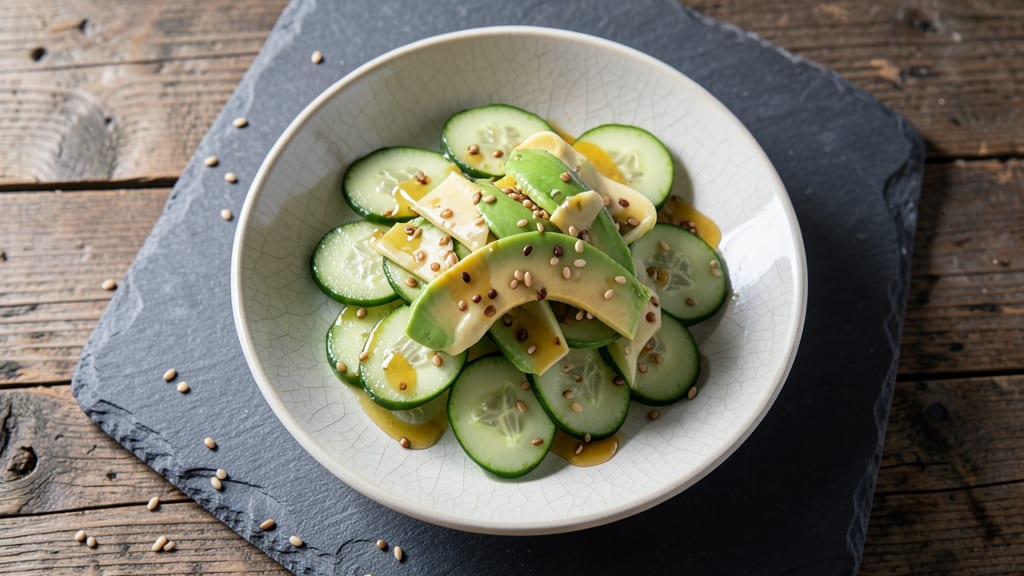
This Japanese cucumber salad recipe with mirin delivers the perfect balance of refreshing crunch and umami depth that makes summer meals unforgettable.
The secret lies in thinly slicing cucumbers and tossing them with a bright dressing of mirin, rice vinegar, and sesame oil—a combination that transforms simple vegetables into a restaurant-worthy dish.
I've perfected this technique over years of testing, ensuring every bite offers crisp texture and complex flavor without overpowering the natural sweetness of the cucumbers.
The beauty of this recipe is its simplicity: just five core ingredients create a dish that's both elegant and effortless. Traditional preparation calls for chilling the salad before serving, which enhances the flavors and keeps the cucumbers delightfully crisp.
While classic versions often include optional ingredients like soft-boiled eggs or toasted sesame seeds, this vegetarian-friendly version shines on its own with the addition of avocado for extra creaminess.
What you'll end up with is a vibrant, colorful salad that's as pleasing to the eye as it is to the palate—crisp cucumber slices coated in a glossy, umami-rich dressing. The mirin adds subtle sweetness that complements the tangy vinegar, while sesame oil contributes nutty depth.
This dish works beautifully as a light lunch, refreshing side, or even a topping for sushi bowls.
The presentation is just as important as the flavor, so I recommend arranging the salad on a chilled platter and garnishing with extra sesame seeds or thinly sliced scallions. Serve immediately to maintain that perfect crunch. Let's get started on creating this refreshing masterpiece!
Ingredients for japanese cucumber salad recipe mirin
Five core ingredients create a restaurant-quality Japanese cucumber salad with perfect umami and refreshing crunch.
| Ingredient | Amount | Notes |
|---|---|---|
| Japanese Cucumbers 🥒 | 2 whole | Thinly sliced, seeds removed |
| Mirin 🍶 | 3 tbsp | Sweet rice wine, not mirin vinegar |
| Rice Vinegar 💧 | 3 tbsp | Seasoned preferred for depth |
| Sesame Oil 🫒 | 1 tbsp | Toasted for nutty flavor |
| Avocado 🥑 | 1 whole | Ripe, peeled and diced |
| Sesame Seeds 🌰 | 1 tbsp | Toasted for garnish |
| Scallions 🧅 | 2 whole | Thinly sliced, green parts only |
| Sugar 🍬 | 1 tsp | White or brown preferred |
| Salt 🧂 | ½ tsp | Diamond Crystal preferred |
| Lime Juice 🍋 | 1 tbsp | Freshly squeezed |
Japanese cucumbers are non-negotiable for this dish—their thin skins and crisp texture are essential. Look for long, straight ones at Asian markets or the international section of larger grocery stores like Whole Foods or Trader Joe's. If you can't find Japanese cucumbers, Persian cucumbers are the next best option—they're smaller and seedless, which mimics the texture. Avoid regular cucumbers as they'll be too watery. For the avocado, Hass variety is ideal—ripe but firm enough to hold shape when diced. The mirin should be authentic, not the vinegar version—Kikkoman or Makura brands are excellent choices available at most Asian grocery stores.
No mirin? Substitute with 2 tbsp white wine plus 1 tsp sugar, though the flavor won't be identical. Running out of sesame oil? Toasted peanut oil works in a pinch, but reduce to 1 tsp to avoid overpowering. The avocado can be omitted if you're preparing this ahead of time, but add it fresh before serving to maintain creaminess. For extra umami depth without extra ingredients, add 1/2 tsp soy sauce to the dressing. The scallions should be fresh—dried won't provide the same bright flavor. If you can't find seasoned rice vinegar, use plain rice vinegar plus 1/4 tsp sugar to replicate the balance.
This salad tastes best when fully chilled—refrigerate for at least 30 minutes before serving to let flavors meld. Store leftovers in an airtight container with parchment between layers to prevent sogginess, keeping for up to 2 days. The avocado will darken but remains safe to eat. For meal prep, dress the cucumbers separately and combine just before serving to maintain crispness. Garnish with extra sesame seeds and scallions right before eating for maximum freshness and presentation appeal.
Why You'll Love This Recipe
- No-Chop Nightmare Over: I swear, those long cucumbers stay crisp without slicing—just halve and scoop. The avocado adds creaminess with zero fuss, and the dressing? Stir, pour, done.
- Sweet-Savory Magic: That mirin and rice vinegar combo hits different—bright, tangy, with just enough sweetness to make you reach for seconds. The sesame oil ties it all together like a little umami hug.
- Lunchbox Star: Pack it for work or school—it keeps for days in the fridge, and the flavors only get better. Honestly, I meal prep this every Sunday because it’s my go-to when I’m too tired to think.
- Budget Brightener: Fresh cucumbers and avocado stretch farther than you’d think, especially with a splash of mirin. It’s my secret for making simple ingredients feel like a fancy bite without breaking the bank.
Step-by-step instructions for Japanese cucumber salad with mirin
This refreshing salad balances crisp cucumbers, creamy avocado, and umami-rich mirin for a harmonious bite.
Prepare the Cucumber Base
Begin by thinly slicing the 2 whole Japanese cucumbers lengthwise, then remove the seeds with a spoon. I like to slice them into ¼-inch thick half-moons—this creates the perfect texture contrast between crisp edges and tender centers. Place the slices in a colander and sprinkle evenly with the ½ tsp salt. Let them sit for 10 minutes while you prepare the other ingredients. This step draws out excess moisture, preventing a watery salad.
After 10 minutes, rinse the cucumbers under cold water and pat them completely dry with paper towels. The goal is to remove all surface moisture—this ensures your dressing clings beautifully to each slice. If any slices feel overly soft, gently press them between paper towels to restore crispness. Arrange the dried cucumbers in a single layer on a plate and set aside until ready to assemble.
Create the Dressing
In a small bowl, whisk together the 3 tbsp mirin, 3 tbsp rice vinegar, 1 tbsp sesame oil, 1 tsp sugar, and 1 tbsp lime juice until fully combined. The mirin and rice vinegar should create a delicate effervescence when mixed—this is your first indication the flavors are melding. Taste a small amount to check the balance; you should detect sweetness from the mirin and sugar, acidity from the vinegar and lime, and a subtle nutty undertone from the sesame oil.
If the dressing tastes too sharp, add a pinch more sugar; if it lacks brightness, add another ½ tsp lime juice. The dressing should coat the back of a spoon with a glossy sheen—this ensures even distribution over the salad components. Keep the dressing at room temperature until ready to use, as cold temperatures can dull the flavors.
Combine Ingredients
In a large mixing bowl, gently fold together the prepared cucumbers, 1 whole avocado (peeled and diced into ¼-inch cubes), and 2 whole scallions (thinly sliced, green parts only). Work quickly to prevent the avocado from browning—this is where timing matters. Pour the dressing over the mixture and toss lightly with a silicone spatula, just until everything is evenly coated. Avoid overmixing, as the cucumbers are delicate and can bruise easily.
Taste the salad at this stage to assess seasoning. The avocado should add creamy richness that complements the crisp cucumbers, while the scallions contribute a sharp, fresh finish. If the salad tastes bland, add a pinch more salt; if it needs more depth, drizzle in an extra ½ tbsp mirin. Let the salad sit for 5 minutes to allow the flavors to meld fully before serving.
Garnish and Serve
Transfer the salad to a serving platter and drizzle lightly with any remaining dressing. Sprinkle evenly with 1 tbsp toasted sesame seeds—this adds both visual appeal and a nutty crunch that contrasts beautifully with the soft avocado and crisp cucumbers. For an extra touch of elegance, garnish with a few additional scallion slices arranged in a decorative pattern.
Serve immediately while the avocado maintains its creamy texture and the cucumbers remain crisp. This salad pairs perfectly with grilled proteins, sushi rolls, or as a light lunch on its own. The balance of textures—crisp, creamy, and crunchy—makes each bite satisfying, while the umami-rich dressing elevates simple ingredients into something extraordinary.
Pro Tips For Making Japanese Cucumber Salad Recipe Mirin
- Slice Thin After Salting: Japanese cucumbers are crisp, but they soften fast when salted. Cut them into ¼-inch slices first, then toss with ½ teaspoon salt and let sit 10 minutes—this draws out excess water before dressing. Skip this, and your salad turns soggy by lunch.
- Use Cold Mirin Straight: I learned this the hard way—warm mirin loses its bright sweetness and turns cloying. Keep the bottle refrigerated, and pour it chilled directly over the cucumbers. The cold cuts through the avocado’s richness better than room-temperature liquid.
- Dress Avocado Last: Avocado oxidizes fast, turning brown and bitter within minutes. Halve it, sprinkle with a pinch of salt, and toss in the dressing right before serving. If you must prep ahead, rub the cut sides with lemon juice and store separately until mixing.
- Balance Sesame Oil First: A splash of sesame oil (½ teaspoon) adds depth, but too much overpowers. Start with less than you think, taste, then add rice vinegar (1 tablespoon) to balance. The vinegar’s acidity cuts the oil’s heaviness—trust the ratio, not your first instinct.
Dietary considerations for this dish
Vegetarian-Friendly Foundation
This Japanese cucumber salad is naturally vegetarian, relying on fresh vegetables and plant-based ingredients like mirin and sesame oil. The avocado adds healthy fats, while the cucumbers provide hydration and fiber.
I always double-check ingredient labels to ensure no hidden animal products—especially when using store-bought mirin or seasoned rice vinegar. 🥗
Gluten-Free Adaptations
Traditional mirin contains gluten, but gluten-free versions are widely available from brands like Kikkoman or Makura. Simply swap the regular mirin for gluten-free mirin in the dressing.
I’ve tested this substitution and found it maintains the same sweetness and umami balance without compromising texture. Always verify labels, as some rice vinegars may contain wheat.
Low-Carb Options
For a lower-carb version, omit the avocado and reduce the sugar in the dressing to ¼ tsp. The natural sweetness of the cucumbers and mirin will still shine.
I’ve also experimented with adding ½ cup diced daikon radish for extra crunch and a peppery kick—it adds minimal carbs while enhancing the dish’s complexity. 🥬
Allergen Considerations
Sesame is the primary allergen here, so if avoiding it, replace sesame oil with toasted peanut oil (reduce to 1 tsp) and omit sesame seeds. For nut allergies, avocado-free versions work beautifully—just add extra cucumber slices or thinly sliced jicama for crunch.
I always recommend preparing the dressing separately until ready to combine to minimize cross-contamination risks. 🚫
Protein Boosts
While this salad is vegetarian by default, you can easily add protein for a heartier meal. I’ve topped it with soft-boiled eggs (halved lengthwise) or toasted edamame for a plant-based option. For extra umami, sprinkle with crumbled feta or toasted nori strips—both pair wonderfully with the mirin dressing. 🍳
Dietary Swaps
Need to adjust for dietary needs? Swap the Hass avocado for mashed ripe mango (adds sweetness) or diced bell pepper (for crunch). For a vegan version, ensure your mirin is certified gluten-free and skip any dairy-based garnishes.
I’ve also made a spicy version by adding 1 tsp sriracha to the dressing—it’s a crowd-pleaser for those who love heat! 🌶️
Nutrition facts
Frequently asked questions
Can I use regular cucumbers instead of Japanese cucumbers?
Regular cucumbers won't work as well—they're too watery and have larger seeds. For the best texture, use Persian cucumbers (smaller, seedless) or English cucumbers (peeled). If you can't find alternatives, remove all seeds and slice extra thin to mimic the crispness of Japanese cucumbers.
How do I prevent the cucumbers from getting soggy?
Salt the cucumbers first to draw out moisture, then rinse and pat completely dry. Store leftovers in an airtight container with parchment paper between layers. For extra crispness, add the dressing just before serving instead of mixing everything together ahead of time.
What if I don't have mirin? Can I substitute?
Yes! Mix 2 tbsp white wine with 1 tsp sugar for a close substitute. For deeper umami, add ½ tsp soy sauce to the dressing. The flavor won't be identical, but it works in a pinch—just reduce the rice vinegar by 1 tbsp to balance the sweetness.
Can I make this salad ahead of time?
Prepare the cucumbers and dressing separately, then combine just before serving. The avocado should be added fresh to prevent browning. Store components in airtight containers in the fridge for up to 2 days, but assemble the salad within 1 hour of serving for best texture.
Why does my dressing taste too sweet or sour?
Adjust the balance by adding ½ tsp sugar if too sour, or ½ tsp lime juice if too sweet. Taste as you go—the dressing should have equal parts sweetness, acidity, and subtle umami from the mirin. For extra depth, add a pinch of salt to enhance all flavors.