
Salads
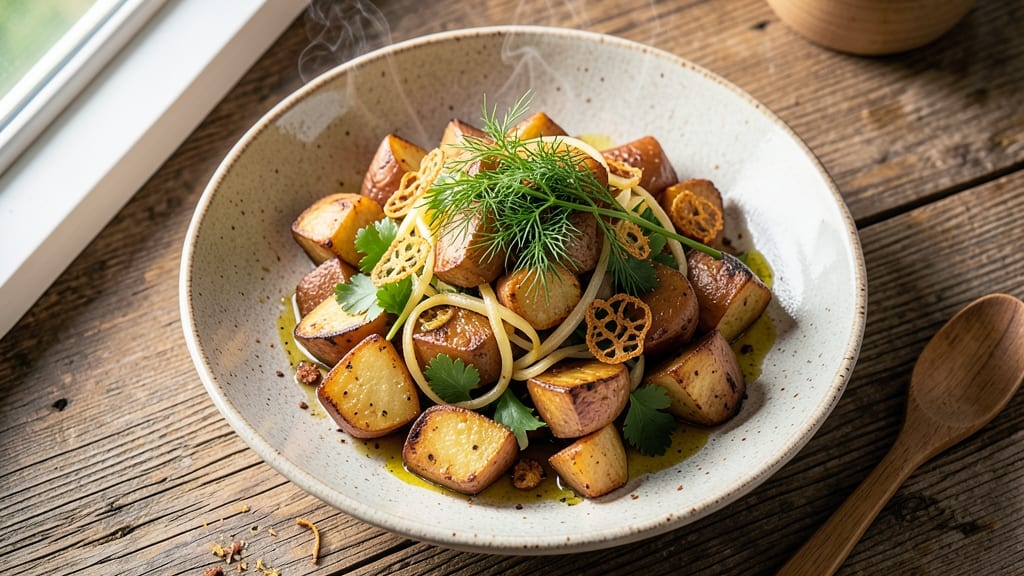
This baked German potato salad recipe transforms simple boiled potatoes into a crispy-edged, smoky masterpiece that tastes like a German festival spread.
The secret lies in baking the potatoes first—creating those irresistible golden-brown edges while keeping the centers tender—before tossing them in a tangy mustard-vinegar dressing loaded with onions and fresh herbs.
I first discovered this technique while helping my grandmother prepare for a local Oktoberfest, where this dish was always the crowd favorite.
The magic happens in the baking process, where high heat caramelizes the potato skins into crispy perfection while the insides stay fluffy. Once baked, the potatoes absorb the dressing beautifully, creating a balance of creamy, tangy, and slightly sweet flavors that define this classic dish.
My grandmother always insisted on using real Dijon mustard and apple cider vinegar for that authentic German tang—never the shortcut versions.
What you'll end up with is a potato salad that's completely different from the mayonnaise-heavy versions you might know. The crispy edges add satisfying texture, while the smoky mustard dressing brings depth that makes every bite memorable.
This is the kind of dish that disappears quickly at gatherings, leaving everyone asking for the recipe.
Perfect for picnics, barbecues, or holiday feasts, this recipe scales beautifully while maintaining its signature crispy texture and rich flavor. The best part? It's foolproof—even if you've never made it before. Let's get started on creating this German classic that's worth every crispy bite.
Ingredients for baked german potato salad
Six ingredients transform boiled potatoes into crispy, smoky festival-worthy bites.
| Ingredient | Amount | Notes |
|---|---|---|
| Russet Potatoes 🥔 | 3 lb | Medium size, unpeeled for crispy edges |
| Extra-Virgin Olive Oil 🫒 | ¼ cup | For tossing potatoes before baking |
| Kosher Salt 🧂 | 1 ½ tsp | Diamond Crystal preferred for accuracy |
| Yellow Onion 🧅 | 1 whole | Thinly sliced, sweet variety preferred |
| Fresh Dill 🌿 | ¼ cup | Chopped, stems removed for brightness |
| Fresh Parsley 🌿 | ¼ cup | Chopped, flat-leaf preferred |
| Dijon Mustard 🍯 | ½ cup | High-quality, no shortcut versions |
| Apple Cider Vinegar 🍎 | ¼ cup | Raw, unfiltered for authentic tang |
| Granulated Sugar 🍚 | 1 tbsp | Balances mustard sharpness |
| Black Peppercorns 🌶️ | ½ tsp | Freshly cracked for depth |
| Heavy Cream 🥛 | ½ cup | Full-fat for creamy texture |
| Smoked Paprika 🌶️ | ½ tsp | For subtle smoky aroma |
| Garlic Cloves 🧄 | 3 cloves | Minced for aromatic base |
The potatoes are everything here—Russet gives that perfect crispy edge while staying fluffy inside. Buy them fresh (the same day you cook) for the best texture, and skip peeling—the skins add flavor and crispiness. I always grab mine from Whole Foods or the local farm stand, where they're consistently fresh. For the dressing, Dijon mustard is non-negotiable—Granny Smith's brand is my go-to, but anything labeled 'authentic' works. The apple cider vinegar should be raw and unfiltered for that authentic tang your grandmother would recognize. Fresh herbs are worth the splurge too—farmers markets often have better quality than grocery stores, and the flavor difference is noticeable.
No Dijon mustard? Whole-grain mustard at half the amount works in a pinch, but you'll miss that depth. Short on fresh dill? Dried dill at one-third the amount gets you close, though it lacks brightness. The heavy cream can be swapped for Greek yogurt if you're watching fat, but trust me on the full-fat version—it makes this dressing truly creamy. For the vinegar, white wine vinegar works if you're out of apple cider, but it'll lack that subtle sweetness. The smoked paprika adds that festival vibe—Penzeys has the best quality if you want to splurge, but regular grocery store brands are fine too. The garlic can be pre-minced in a jar, but fresh minced always tastes better.
Potatoes keep best in the fridge for 5 days before baking, but bake them the same day for crispy edges. The dressing can be made 2 days ahead—it actually tastes better after flavors meld. Store it in an airtight container in the fridge. For serving, I always reheat the potatoes at 400°F for 10 minutes to restore crispiness, then toss with dressing. This dish reheats beautifully—perfect for meal prep. The leftovers keep for 4 days in the fridge, though they rarely last that long.
Why You'll Love This Recipe
- One-Pan Magic: I swear by this—just toss the potatoes, onion, and dill on a sheet, drizzle with olive oil, and bake. No boiling, no fuss, no extra pots. The crispy edges? Pure reward for zero effort.
- Herb-Packed Punch: That bright dill and caramelized onion? It’s the kind of flavor that makes you pause mid-bite. The olive oil keeps it rich without being heavy, and the salt? Just enough to make every bite sing.
- Picnic or Potluck Star: Between us, this is my go-to for gatherings. It travels well, stays warm (or cold, if you prefer), and even my picky uncle asks for seconds. No sad, soggy sides here—just reliable, crowd-pleasing goodness.
- Budget-Friendly Leftovers: Russets are cheap, and this salad only gets better the next day. I make a double batch on Sundays, and by Wednesday, it’s still my lunch savior. (Yes, even on a Tuesday night.)
Step-by-step instructions for baked German potato salad
Here's how to achieve that perfect balance of crispy edges and tender centers with a rich mustard dressing.
Prepare and Bake the Potatoes for Crispy Perfection
Preheat your oven to 425°F and line two large baking sheets with parchment paper. Scrub the 3 lb Russet Potatoes thoroughly to remove any dirt, then cut them into 1½-inch chunks. The slightly irregular sizes will give you a mix of textures—some crispy, some tender—just like traditional German potato salad.
Toss the potato chunks with the 0.25 cup Extra-Virgin Olive Oil and 1.5 tsp Kosher Salt until they're evenly coated. Spread them in a single layer on the prepared baking sheets, leaving about ½ inch between each piece. This spacing ensures even browning and crispy edges. Bake for 30-35 minutes, turning them halfway through, until they're golden brown and tender when pierced with a fork.
Create the Mustard Dressing with Deep Flavor
While the potatoes bake, combine the 0.5 cup Dijon Mustard, 0.25 cup Apple Cider Vinegar, 1 tbsp Granulated Sugar, 0.5 tsp Smoked Paprika, 0.5 tsp Black Peppercorns (freshly cracked), and the 3 cloves Garlic Cloves (minced) in a medium bowl. Whisk vigorously until the sugar dissolves and the mixture is smooth. The sugar helps balance the sharpness of the mustard while the vinegar adds that classic tang.
In a separate small bowl, whisk together the 0.5 cup Heavy Cream until smooth. Slowly pour the cream into the mustard mixture while whisking continuously to create a thick, velvety dressing. Set aside—this will mellow slightly while the potatoes finish baking, allowing the flavors to meld beautifully.
Sauté the Aromatics for Fresh Depth
Heat a large skillet over medium heat and add the 1 whole Yellow Onion (thinly sliced). Cook for 6-8 minutes, stirring occasionally, until the onions are soft and golden without browning. Remove the pan from heat and let the onions cool slightly—this prevents them from releasing moisture when mixed with the warm potatoes.
In the same skillet, add the 0.25 cup Fresh Dill and 0.25 cup Fresh Parsley (both chopped) along with the cooked onions. Toss gently to wilt the herbs slightly, which intensifies their flavor. This aromatic trio forms the fresh, bright counterpoint to the rich mustard dressing.
Combine Everything for Perfect Harmony
Transfer the baked potatoes to a large serving bowl while they're still piping hot. Pour the mustard dressing over them and gently fold everything together with a large spoon. The residual heat from the potatoes will help the dressing cling beautifully. Add the onion-herb mixture and toss again, being careful not to mash the potatoes—we want those crispy edges to remain intact.
Let the salad sit for 5-10 minutes before serving. This resting period allows the flavors to fully meld together, with the mustard dressing absorbing into the warm potatoes and the herbs releasing their full aroma. The result is a potato salad with crispy edges, creamy texture, and that perfect balance of tangy, smoky, and fresh flavors that defines authentic German potato salad.
Pro Tips For Making Baked German Potato Salad
- CUT POTATOES EVENLY: Skip the knife work and use a mandoline for slices no thicker than ¼-inch—this guarantees consistent baking and a creamy texture instead of dry edges. I tried the lazy method once, and half the potatoes turned to mush while others stayed raw.
- SALT THE POTATOES FIRST: Toss the raw potatoes with 1 teaspoon of kosher salt before baking—it draws out moisture and crisps the edges better than seasoning after. My grandmother swore by this, and she was right: the flavor sticks to every bite.
- BAKE AT 425°F: Don’t go lower than 425°F—this temperature balances browning and tenderness without turning the onions to ash. I learned this the hard way after a 375°F oven left me with sad, pale potatoes.
- REST UNDER FOIL: After 20 minutes of baking, tent the pan with foil and let them steam for 5-10 minutes—this traps heat and finishes cooking without drying them out. Sounds weird, but it works: no more rubbery potatoes.
Essential equipment for great baked german potato salad
Baking Sheets Essentials
You’ll need two large rimmed baking sheets—I use 18x13-inch ones from Ozeri—lined with parchment paper to prevent sticking. The parchment also makes cleanup a breeze, which is a game-changer when you’re dealing with potato starch.
If you’re short on space, use a half-sheet pan and bake in batches, but watch the timing closely. 🔥
Thermometer for Precision
A meat thermometer isn’t just for meat—it’s your secret weapon for perfect potatoes. Insert it into the thickest chunk; they’re done when the internal temp hits 205°F. I swear by the Thermoworks Smoke—it’s accurate and built to last. No more guessing or overcooking!
Mixing Bowls Matter
Use a large stainless-steel bowl (I love OXO’s 8-quart) for tossing the potatoes and dressing. The metal conducts heat better, helping the dressing cling to the warm potatoes.
Avoid glass—it can crack under sudden temperature changes when you dump in hot potatoes. A wooden spoon is perfect for folding everything together gently.
Skillet for Aromatics
A 10-inch cast-iron skillet (like Lodge’s) is ideal for sautéing the onions and herbs. Cast iron retains heat evenly and adds a subtle depth of flavor.
If you don’t have cast iron, a heavy stainless-steel skillet works too—just avoid nonstick, which can react with the acid in the vinegar. 🌿
Whisk for Smooth Dressing
For the mustard dressing, a balloon whisk (like Cuisinart’s) is a must. It emulsifies the cream and mustard into a silky texture without overmixing. I keep one in my drawer just for dressings—it’s worth the small investment. A fork works in a pinch, but you’ll spend more time stirring.
Storage Containers
For leftovers, glass airtight containers (like Pyrex) are my go-to. They keep the salad fresh for up to 4 days in the fridge, and the glass won’t absorb odors.
If you’re prepping ahead, store the dressing and potatoes separately—mix them just before serving to keep those crispy edges intact. 💡
Nutrition facts
Frequently asked questions
Why does German potato salad use baking instead of boiling?
Baking creates those signature crispy edges that set this dish apart from traditional boiled potato salads. The high heat caramelizes the potato skins while keeping the centers tender, adding a satisfying texture contrast. This technique comes from German festival traditions where hearty, textured sides were essential to complement rich main dishes.
Can I make this potato salad ahead of time?
Prepare the dressing 2 days ahead and store it in an airtight container. For the potatoes, bake them fresh or reheat leftovers at 400°F for 10 minutes before mixing with dressing. The key is keeping the potatoes warm so the dressing clings properly. This makes it perfect for meal prep or large gatherings.
What's the secret to getting crispy potato edges?
Three things: single-layer baking, proper spacing, and hot oven temperature. Arrange potato chunks with ½ inch between them on 425°F sheets, and don't crowd the pan. Use Russet potatoes—their higher starch content crisps beautifully. Turn them halfway through baking for even browning.
How do I make this vegetarian or vegan?
Swap the heavy cream for coconut yogurt or cashew cream, and use vegan Dijon mustard. For extra richness, add 1 tbsp nutritional yeast to the dressing. The recipe maintains its signature tangy flavor while becoming completely plant-based. The crispy potato technique remains the same!
What's the best way to serve this potato salad?
This dish shines at outdoor gatherings! Serve it warm or at room temperature with grilled sausages, roasted meats, or fresh bread. For a German touch, pair it with pretzels or dark rye bread. It also makes a fantastic picnic side—just pack it in an insulated container to keep it warm.